Medium voltage switchgear is the controlled switching, isolation, protection, and metering point for critical medium voltage systems. A successful electrical switchgear installation depends on more than placing panels on a foundation: the site, storage, earthing, cable routing, commissioning, documentation, and long-term mv switchgear maintenance plan all have to be ready before energization. These Medium Voltage Switchgear Installation Guidelines & Overseas Site Requirements outline practical planning steps for domestic and international projects while reinforcing one rule above all: follow the manufacturer’s instructions, local laws, utility requirements, and qualified electrical safety procedures.
What does a safe medium voltage switchgear installation require?
A safe installation requires the correct equipment for the network, a prepared room or enclosure, verified protection settings, trained personnel, and documented checks before first energization. IEC guidance commonly treats medium voltage distribution as above 1 kV and generally up to and including 52 kV, while ABB’s SafeGear range is an example of indoor metal-clad medium voltage switchgear for primary distribution up to 15 kV. Because ratings, construction, access rules, and service conditions vary by product and country, installation teams should never rely on a generic checklist alone. (electrical-installation.org)
The practical objective is simple: keep people away from live parts, keep faults contained as designed, and keep the equipment operating inside its specified service conditions. That means the project team should confirm drawings, foundations, cable entries, control power, ventilation, clearances, lifting access, and test equipment before the switchgear arrives. It also means overseas sites need early coordination on customs documents, local certification, language requirements, spare parts, and the availability of trained commissioning personnel.
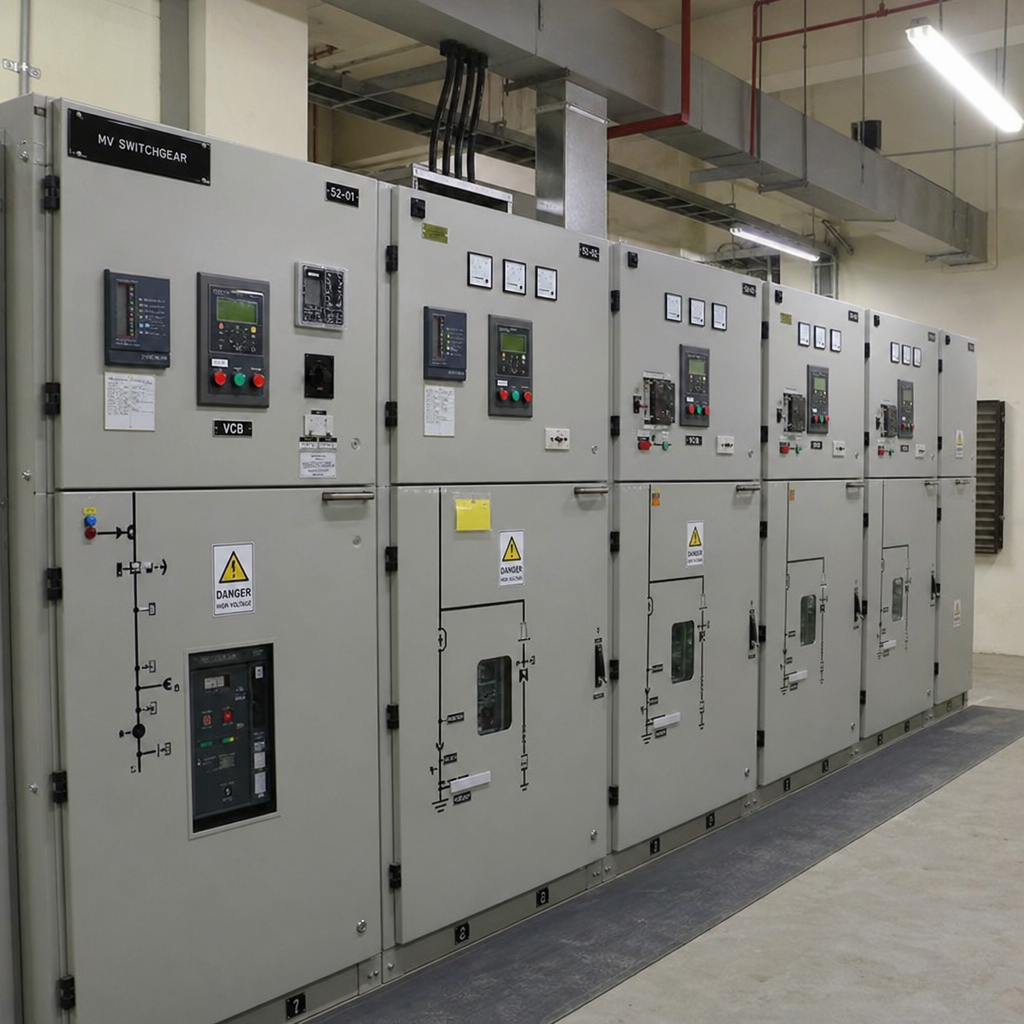
Core functions of medium voltage switchgear
Medium voltage equipment is installed to protect, isolate, control, and measure power distribution. In a typical MV/LV substation, the installation may connect to the utility network, provide general protection, feed transformers, distribute power internally, and support metering, depending on the project design. Those functions make switchgear a central point of operational control, not just a cabinet with breakers. (electrical-installation.org)
For owners, the benefit is controlled continuity. Properly selected and installed medium voltage switchgear allows operators to isolate sections for maintenance, clear faults through coordinated protection, and reduce the risk of unsafe switching. For contractors, the implication is that mechanical assembly, electrical termination, relay work, and functional testing must be treated as one integrated installation package.
Pre-installation planning and site readiness
The best installations are decided before the first panel is unpacked. Start with the single-line diagram, manufacturer drawings, relay scheme, floor plan, cable schedule, and earthing design. Compare these documents against the delivered medium voltage equipment so that panel lineup, ratings, auxiliary voltage, CT/VT data, and accessories match the approved design.
A practical readiness review should confirm:
- The switchgear room is enclosed, secure, dry, clean, and reserved for electrical equipment.
- Floors, embedded channels, trenches, openings, and lifting paths match the approved drawings.
- Access space is available for doors, withdrawable parts, racking tools, test equipment, and future maintenance.
- Earthing conductors, bonding points, and grounding bars are installed as designed.
- Cable bending space, gland plates, control wiring routes, and segregation requirements are understood.
- Temporary storage protects panels from moisture, dust, vibration, and corrosive atmospheres.
- The commissioning team has the latest manuals, test forms, settings files, and approved procedures.
Environmental control deserves special attention. IEC-related guidance for indoor MV equipment recognizes that humidity and condensation can affect equipment, and it identifies humidity limits under normal service conditions while noting that condensation may still occur. Project teams should therefore treat heaters, ventilation, dehumidification, sealing, and housekeeping as reliability measures, not optional finishing details. (electrical-installation.org)
Installation sequence for medium voltage systems
A typical electrical switchgear installation moves through receiving, positioning, assembly, connection, inspection, testing, and energization. The exact order must follow the product manual, but the logic is consistent: protect the equipment, align it accurately, bond it correctly, connect it cleanly, and verify every function before service.
A field sequence usually includes:
- Receiving inspection:Check crates, shock indicators if fitted, panel labels, accessories, and visible damage before signing off delivery.
- Storage control:Keep panels upright, dry, clean, and protected until the room is ready.
- Positioning and anchoring:Move panels with approved lifting methods, align the lineup, and secure it to the foundation.
- Mechanical assembly:Join sections, install busbar links or shipping-split connections, and fit manufacturer-supplied barriers and covers.
- Earthing and bonding:Connect the main earth bar and verify continuity across the lineup.
- Power and control cabling:Terminate MV cables, shields, glands, control wires, and auxiliary circuits according to drawings and torque requirements.
- Functional checks:Test shutters, interlocks, racking movement, door operation, indicators, heaters, alarms, and trip/close circuits.
- Commissioning tests:Complete insulation, continuity, ratio, polarity, relay, breaker timing, secondary injection, and protection coordination checks as applicable.
- Energization approval:Review permits, test records, punch lists, safety boundaries, and switching procedures before applying voltage.
How should ABB medium voltage switchgear installation be handled?
ABB medium voltage switchgear installation should be handled according to the exact ABB manual for the installed product, not by borrowing instructions from another lineup or voltage class. ABB UniGear ZS1 documentation, for example, organizes installation, operation, commissioning, and maintenance activities and states that maintenance includes inspection, servicing, and repair; ABB also recommends qualified, trained personnel and strict compliance with country-specific regulations. (library.e.abb.com)
For installers, that means the ABB manual is a controlled project document. Use it to confirm lifting methods, shipping-split assembly, busbar work, torque values, interlock checks, withdrawable-part handling, and commissioning steps. If the project specifies abb medium voltage switchgear installation support, clarify whether ABB service personnel, an authorized partner, or the electrical contractor is responsible for supervision, testing, and final documentation.
Overseas site requirements that change the project
Overseas projects add risk because site conditions, codes, logistics, and available skills can differ sharply from the design office assumptions. Local standards and rules for protection of persons must be followed, and IEC recommendations should be considered where relevant. The project should identify the authority having jurisdiction, utility interface rules, inspection stages, and required language for labels, manuals, warnings, and operating procedures before shipment. (electrical-installation.org)
Plan early for:
- Import documents, packing lists, certificates, and country-specific conformity requirements.
- Marine, desert, tropical, high-altitude, or polluted environments that may affect insulation and corrosion control.
- Storage delays at ports, laydown yards, or unfinished substations.
- Local availability of test instruments, lifting equipment, torque tools, consumables, and calibrated meters.
- Training for operators who will rack, isolate, test, and maintain the switchgear.
- Spare parts strategy for relays, auxiliary devices, heaters, indicating lamps, fuses, breakers, and operating handles.
Maintenance begins at installation
MV switchgear maintenance is easier when the installation team leaves accurate records and clean equipment. Manuals for MV switchgear commonly distinguish inspection, servicing, repair, preventive maintenance, and risk-based maintenance, with intervals influenced by service duty, loading, switching frequency, short-circuit operations, pollution, and aggressive air. (library.e.abb.com)
Before handover, create a baseline file with test reports, relay settings, torque records, as-built drawings, nameplate photos, spare parts lists, and outstanding recommendations. Operators should also know which checks can be performed visually, which require outages, and which must be done only by trained service personnel.
Final commissioning and handover checklist
Use a final checklist to prevent small omissions from becoming operational problems:
- All panels cleaned, closed, labeled, and free from tools or foreign material.
- Earthing, interlocks, shutters, racking mechanisms, and mechanical indicators verified.
- Protection settings approved and tested.
- Control power, alarms, heaters, meters, and communication signals checked.
- Cable tests completed and terminations inspected.
- Operating procedures, permits, and switching sequence approved.
- Maintenance plan, spares, manuals, and training records handed over.
Medium voltage switchgear is long-life infrastructure, but only if the installation respects the design intent. Treat the site as part of the system, involve qualified personnel early, document every critical step, and align overseas requirements before shipment. That discipline gives medium voltage systems a safer start and gives operators a clearer path for reliable maintenance after energization.