Medium voltage switchgear plays a critical role in distributing power safely, isolating faults, and protecting downstream equipment. A practical maintenance routine helps teams spot early warning signs before they turn into outages, safety incidents, or costly equipment damage. This guide explains daily care, inspection priorities, and fault troubleshooting steps for facility teams, plant engineers, and anyone coordinating with an MV switchgear maintenance company.
What should daily MV switchgear maintenance include?
Daily MV switchgear maintenance should include visual inspection, environmental checks, operating condition review, abnormal sound or odor detection, and confirmation that indicators, meters, alarms, and protective devices appear normal. The goal is not to dismantle equipment every day, but to recognize small changes quickly so qualified personnel can investigate safely. For medium voltage switchgear, consistent observation is often the difference between planned service and an unexpected shutdown.
A daily walk-through should be calm, systematic, and documented. Operators should compare what they see and hear against normal conditions for that specific room and equipment lineup. If something looks unusual, the safest next step is to record it, restrict access if needed, and escalate it to authorized electrical maintenance staff.
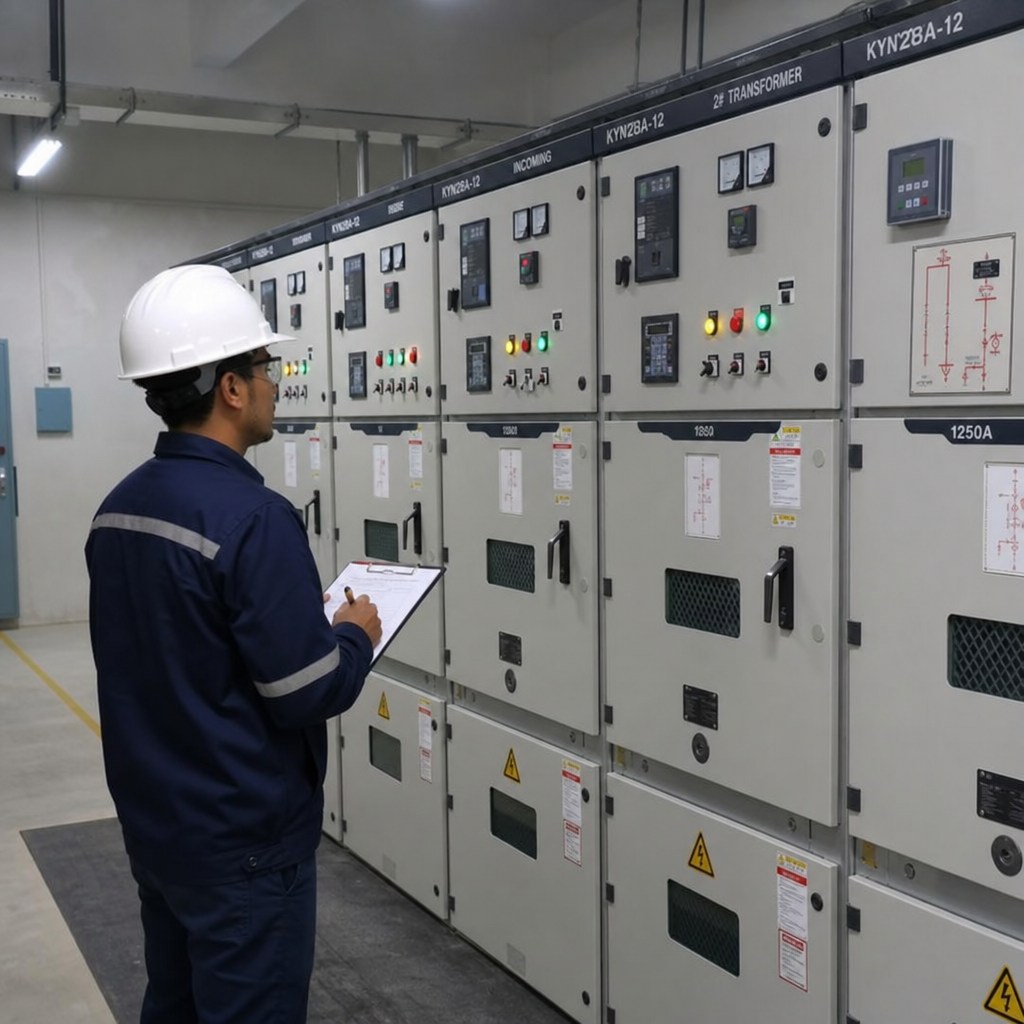
Daily inspection points that matter most
A useful switchgear inspection focuses on conditions that affect insulation, mechanical operation, heat buildup, and protection performance. While detailed testing belongs in scheduled electrical switchgear maintenance, daily checks can still reveal developing problems.
Key inspection points include:
- Room condition:Confirm that the switchgear room is clean, dry, well ventilated, and free from stored materials that block access or airflow.
- Temperature and humidity:Look for signs of condensation, moisture stains, blocked ventilation, or unusually hot areas near panels.
- Panel appearance:Check for deformation, discoloration, corrosion, loose covers, damaged labels, or evidence of dust accumulation.
- Indicators and meters:Review breaker positions, relay displays, alarm windows, voltage indication, current readings, and status lights.
- Sound and smell:Listen for buzzing, crackling, vibration, or humming that is stronger than usual. Treat burning odors or ozone-like smells as urgent warning signs.
- Cable and termination areas:Where safely visible, look for tracking marks, discoloration, insulation damage, or signs of overheating.
- Access and safety items:Confirm that doors, locks, warning signs, mats, emergency lighting, and fire protection access remain in good condition.
These checks should be performed without bypassing interlocks, opening energized compartments unnecessarily, or touching exposed conductive parts. Medium voltage maintenance requires discipline because many hazards are not visible from outside the equipment.
Building a practical MV switchgear maintenance checklist
An mv switchgear maintenance checklist should be simple enough to use every day and detailed enough to support trend tracking. The best checklist does not just ask whether equipment is “okay.” It guides the inspector to observe specific conditions and record anything that has changed.
A practical daily checklist may include:
- Confirm the switchgear room is secure, clean, dry, and unobstructed.
- Check ventilation, cooling, lighting, and general room temperature.
- Review breaker, disconnect, and earthing switch positions from external indicators.
- Check relay panels, meters, annunciators, and alarm messages.
- Listen for abnormal sound and note vibration, humming, or crackling.
- Look for smoke, odor, dust, corrosion, water ingress, pests, or physical damage.
- Verify that inspection windows, labels, mimic diagrams, and nameplates are readable.
- Record load readings or visible meter values when required by site practice.
- Report abnormalities immediately through the approved maintenance process.
- Sign, date, and file the inspection record for future comparison.
Daily records become valuable when a fault occurs. They help maintenance teams determine whether the problem appeared suddenly or developed over time, which can shorten troubleshooting and support better repair decisions.
Common warning signs before a switchgear fault
Switchgear faults rarely announce themselves politely. However, many failures are preceded by signs that trained personnel can recognize during routine inspection. Heat, contamination, moisture, mechanical wear, and insulation stress are frequent contributors to trouble in medium voltage switchgear.
Watch closely for:
- Repeated alarms or nuisance trips:These may point to protection settings, control circuit issues, unstable loads, or real developing faults.
- Unusual heat:Discolored paint, hot metal smells, or visibly damaged insulation can suggest poor connections or overload conditions.
- Moisture or condensation:Water reduces insulation reliability and can encourage tracking, corrosion, and flashover risk.
- Dust and contamination:Conductive dust or chemical residue can weaken insulation paths and interfere with mechanisms.
- Mechanical resistance:Breakers or shutters that do not operate smoothly may indicate alignment, lubrication, or wear problems.
- Relay or control power issues:Flickering displays, communication failures, or low control voltage can affect protection dependability.
None of these signs should be ignored simply because the equipment is still running. A switchgear lineup can appear operational while a serious defect is developing inside.
How should teams troubleshoot MV switchgear faults safely?
Teams should troubleshoot MV switchgear faults by first making the area safe, identifying the symptoms, reviewing alarms and protection records, then isolating the fault only through approved procedures performed by qualified personnel. The process should move from observation to verification, not guesswork. Safety boundaries, lockout and tagout rules, and site switching procedures must guide every step.
A structured approach usually works best:
- Stabilize the situation.Keep unqualified personnel away, confirm whether any fire, smoke, arc event, or shock hazard is present, and contact responsible electrical staff.
- Collect information.Record relay targets, alarm messages, breaker status, event logs, load conditions, and what operators observed before the trip.
- Identify the affected section.Determine whether the issue is incoming supply, busbar, feeder, transformer, motor circuit, control power, or protection equipment.
- Inspect externally first.Look for visible damage, odor, heat marks, tripped auxiliary devices, blown fuses, or abnormal indications.
- Test only when authorized.Insulation resistance, contact resistance, relay testing, timing tests, and cable checks should be performed by competent personnel using suitable equipment.
- Confirm before re-energizing.Do not restore power until the cause is understood, repairs are complete, protective functions are available, and switching approval has been given.
The pressure to restore service can be intense, but re-energizing without understanding the cause may turn a minor fault into major equipment damage.
When is a specialist maintenance company needed?
A specialist MV switchgear maintenance company is needed when the task involves internal inspection, breaker servicing, relay testing, insulation diagnostics, fault investigation, retrofits, or any work beyond routine external observation. Medium voltage equipment requires specific training, test instruments, procedures, and safety controls. Bringing in experienced support is often the most efficient way to reduce risk and restore confidence in the system.
Specialists can help create site-specific maintenance plans, perform periodic shutdown inspections, clean and test insulation systems, service circuit breakers, verify protection devices, and document findings. They can also advise whether recurring issues are related to the equipment, environment, load profile, or operating practices.
Maintenance habits that improve reliability
Good maintenance is not only about responding when something fails. It is a habit of observation, documentation, cleanliness, and timely correction. For medium voltage maintenance, small improvements in daily discipline can support long-term reliability.
Helpful practices include:
- Keep the switchgear room restricted to authorized personnel.
- Maintain clear space around panels for operation and emergency access.
- Control dust, moisture, pests, and corrosive vapors.
- Review inspection logs regularly instead of filing them away unread.
- Schedule periodic electrical switchgear maintenance based on equipment duty, age, environment, and manufacturer guidance.
- Train operators to recognize abnormal sounds, smells, alarms, and visual changes.
- Treat repeated minor defects as patterns, not isolated annoyances.
These habits help maintenance teams move from reactive repairs to planned intervention.
A reliable system starts with consistent attention
Daily Maintenance and Fault Troubleshooting of MV Switchgear is ultimately about protecting people, equipment, and continuity of power. Daily checks do not replace professional testing or scheduled service, but they create the first line of defense against preventable failures.
By using a clear mv switchgear maintenance checklist, documenting every switchgear inspection, and involving qualified specialists when needed, facilities can manage medium voltage switchgear with more confidence. The safest and most reliable systems are usually the ones watched carefully every day.