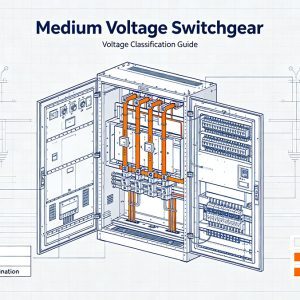
Electrical switchgear is the equipment used to control, protect, isolate, and distribute power in an electrical system. The main voltage switchgear categories are low voltage switchgear, medium voltage switchgear, and high voltage switchgear, and the right choice depends on the system voltage, fault current, application, safety requirements, and maintenance approach. Understanding these switchgear types helps engineers, facility teams, and buyers specify equipment that is safe, serviceable, and fit for the power network it supports.
What does voltage classification mean in switchgear?
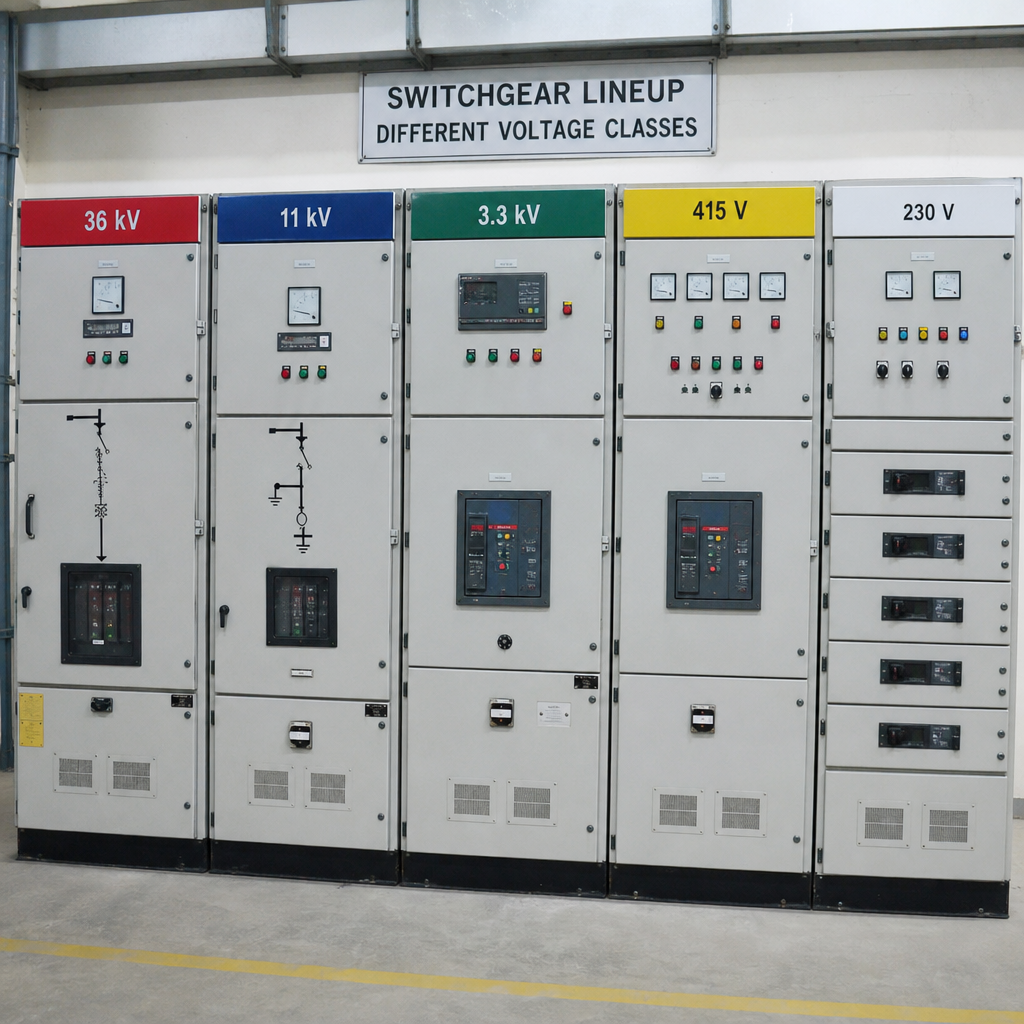
Voltage classification in switchgear describes the operating voltage range the equipment is designed to handle safely and reliably. In common industry use, low voltage switchgear is typically associated with systems up to 1,000 volts AC, medium voltage switchgear is commonly used above 1 kV and into the tens of kilovolts, and high voltage switchgear is used for higher transmission and substation-level voltages. Exact boundaries can vary by standard, country, and project specification, so the equipment rating should always be matched to the applicable code and the actual system design.
This classification matters because voltage affects insulation distance, arc behavior, enclosure design, switching technology, testing requirements, and installation practices. A switchgear lineup designed for a commercial building service entrance is not built the same way as gear used in a utility substation. Even when two systems perform similar functions, the voltage level changes how protection, isolation, and operator safety are engineered.
The role of electrical switchgear in a power system
Electrical switchgear sits at key points in the power distribution path. It allows operators and automated protection systems to energize, de-energize, isolate, and protect circuits. When a fault occurs, switchgear works with protective relays, circuit breakers, fuses, disconnects, and control systems to interrupt current before equipment damage or unsafe conditions spread.
Switchgear also supports routine operation. A facility may use it to transfer loads, isolate a feeder for maintenance, protect transformers, or divide a power system into manageable sections. In larger networks, voltage switchgear helps coordinate generation, transmission, distribution, and end-use loads so that each part of the system can be controlled without shutting down everything at once.
The core functions usually include:
- Control:Opening, closing, and transferring circuits during normal operation.
- Protection:Detecting faults and interrupting damaging current quickly.
- Isolation:Creating a visible or verified separation for inspection and maintenance.
- Distribution:Routing power to downstream panels, transformers, motors, buildings, or substations.
- Monitoring:Providing metering, alarms, and status information for operators and automation systems.
Low voltage switchgear
Low voltage switchgear is commonly found in commercial buildings, industrial plants, data centers, hospitals, manufacturing facilities, and large residential or mixed-use developments. It is usually installed downstream of transformers and is used to distribute power to panels, motor control centers, mechanical systems, lighting, and other end-use loads.
Because low voltage systems are closer to the equipment people interact with every day, usability and maintainability are important. These assemblies often include air circuit breakers, molded case circuit breakers, metering, ground-fault protection, transfer controls, and communication modules. The equipment may be configured as metal-enclosed switchgear, switchboards, panelboards, or motor control centers depending on the application.
Low voltage does not mean low risk. Fault currents can be very high, and arc flash hazards must be evaluated carefully. Proper short-circuit ratings, selective coordination, labeling, personal protective equipment procedures, and maintenance access are essential when selecting and operating low voltage switchgear.
Common uses include:
- Main service entrance distribution in buildings.
- Generator and utility transfer systems.
- Feeder protection for mechanical and process loads.
- Power distribution for data halls, production lines, and critical facilities.
- Local distribution after a step-down transformer.
Medium voltage switchgear
Medium voltage switchgear is used where power must be distributed at higher voltage to reduce current, improve efficiency, and support larger loads over longer distances. It is common in industrial campuses, utility distribution systems, mining operations, renewable energy plants, water treatment facilities, airports, hospitals, universities, and large commercial complexes.
This category often includes metal-clad or metal-enclosed assemblies with vacuum circuit breakers, load break switches, fuses, protective relays, instrument transformers, bus systems, and cable compartments. Vacuum interruption is widely used in medium voltage switchgear because it can interrupt faults efficiently within compact equipment designs. Some systems may also use gas-insulated designs where space constraints, environmental exposure, or reliability requirements justify them.
Medium voltage equipment often feeds transformers, large motors, substations, and distribution feeders. Protection coordination becomes more involved because a fault may affect significant portions of a facility or utility network. Relay settings, grounding method, feeder configuration, and maintenance procedures should be considered together rather than treated as separate decisions.
High voltage switchgear
High voltage switchgear is typically associated with transmission networks, grid substations, large power plants, and major interconnection points. At these voltage levels, the design focus shifts heavily toward insulation coordination, switching transients, clearance distances, environmental performance, and system reliability. The equipment may be air-insulated, gas-insulated, or hybrid, depending on the substation layout and performance requirements.
High voltage switching can involve circuit breakers, disconnect switches, grounding switches, surge arresters, instrument transformers, and control systems. These installations are usually engineered as part of a broader substation or transmission project rather than purchased as a simple standalone product. Physical space, weather exposure, seismic requirements, maintenance philosophy, and grid operator rules may all influence the final design.
Because high voltage switchgear supports critical infrastructure, failure consequences can be significant. Specification, testing, installation, and commissioning are normally handled by experienced engineering teams using project-specific requirements and applicable standards.
How do you choose between switchgear types?
You choose between switchgear types by starting with the electrical system requirements, not by selecting a product category first. The nominal voltage, maximum system voltage, available fault current, load profile, environment, reliability expectations, and code requirements determine whether low voltage, medium voltage, or high voltage switchgear is appropriate.
A practical selection process should consider:
- System voltage:Match the switchgear rating to the operating voltage and maximum design voltage.
- Interrupting rating:Confirm the equipment can safely interrupt the available short-circuit current.
- Continuous current rating:Size bus, breakers, and feeders for present loads and realistic growth.
- Protection scheme:Coordinate breakers, relays, fuses, and grounding to isolate only the affected circuit when possible.
- Environment:Account for indoor or outdoor installation, temperature, humidity, dust, corrosive atmosphere, altitude, and space limits.
- Maintenance access:Ensure safe access for inspection, testing, racking, isolation, and cable work.
- Reliability needs:Consider redundancy, spare breakers, sectionalizing, remote operation, and monitoring.
- Applicable standards:Verify project requirements against local codes, utility rules, and recognized equipment standards.
Key differences that affect design and operation
The biggest differences among low voltage, medium voltage, and high voltage switchgear appear in insulation, interruption technology, enclosure construction, and operational risk. As voltage rises, the equipment generally requires more robust insulation systems and greater attention to clearances. The design must control not only normal operating conditions but also abnormal events such as faults, switching surges, and insulation stress.
Low voltage gear is often more closely integrated with building distribution and facility operations. Medium voltage switchgear bridges facility distribution and utility-style power systems, so protection coordination and transformer interfaces are central. High voltage gear is more likely to be part of a substation or grid asset, where engineering studies and system-level reliability dominate the decision-making process.
For buyers and specifiers, this means a simple voltage label is not enough. Two pieces of medium voltage switchgear may differ widely in construction, arc-resistance features, breaker type, relay package, cable access, and expansion options. The best specification describes the full operating context instead of relying on a generic category name.
Common specification mistakes to avoid
Several switchgear problems begin early in planning, when assumptions replace detailed electrical data. Underrating equipment, ignoring future load growth, or failing to coordinate protection can lead to costly redesigns or unsafe installations. Clear communication between the owner, engineer, electrical contractor, utility, and equipment manufacturer reduces these risks.
Avoid these common mistakes:
- Selecting voltage switchgear before confirming the actual system voltage and grounding method.
- Treating interrupting rating and continuous current rating as interchangeable.
- Forgetting space for cable bending, ventilation, rear access, or future sections.
- Overlooking arc flash mitigation and safe switching procedures.
- Assuming all switchgear types have the same maintenance needs.
- Specifying monitoring and communication features too late in the project.
- Using generic language where project-specific ratings and accessories are required.
A clear classification supports safer decisions
Voltage Classification Low Voltage vs Medium Voltage vs High Voltage Switchgear is more than a naming exercise. It is the starting point for matching electrical switchgear to the real demands of a power system. Low voltage switchgear supports building and equipment distribution, medium voltage switchgear handles larger distribution networks and major loads, and high voltage switchgear serves transmission, substations, and critical grid connections.
The safest approach is to define the system first, then choose the equipment. When voltage rating, fault duty, protection, environment, access, and future needs are evaluated together, switchgear becomes more than a cabinet of breakers or switches. It becomes a coordinated part of a reliable electrical system.