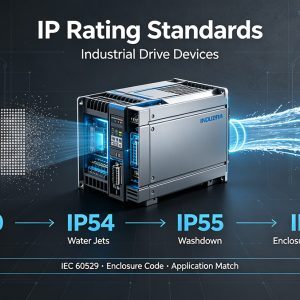
Industrial drive devices work in places where dust, water, coolant, washdown spray, and accidental contact can damage electronics or interrupt production. IP ratings help engineers, buyers, and maintenance teams match a drive enclosure to the environment instead of relying on vague terms such as “weatherproof” or “sealed.” This ip rating guide explains the code, common ip rating levels, and how to apply ip protection standards in industrial drive selection.
What does an IP rating mean for an industrial drive device?
An IP rating describes the degree of protection an enclosure provides against solid objects, access to hazardous parts, and water ingress. The core system is IEC 60529, which classifies protection for electrical equipment enclosures and is formally titled “Degrees of protection provided by enclosures (IP Code).” For industrial drives, the rating applies to the enclosure or packaged device, not automatically to every cable gland, connector, vent, or field modification added later. (webstore.iec.ch)
An IP code usually has two digits. The first digit addresses solid particle protection, from large-object access through dust-tight protection. The second digit addresses water exposure, from dripping water through jets, powerful jets, immersion, or high-pressure spray depending on the code used. (dhs.gov)
The practical IP rating chart for drive environments
A useful ip rating chart should connect the number to the real installation conditions. For drive devices, the question is not “What is the highest rating?” but “What contaminants will the drive face during normal operation, cleaning, and maintenance?”
Common examples include:
- IP20:Basic touch protection for clean electrical cabinets. It is usually not suitable for exposed dusty or wet areas.
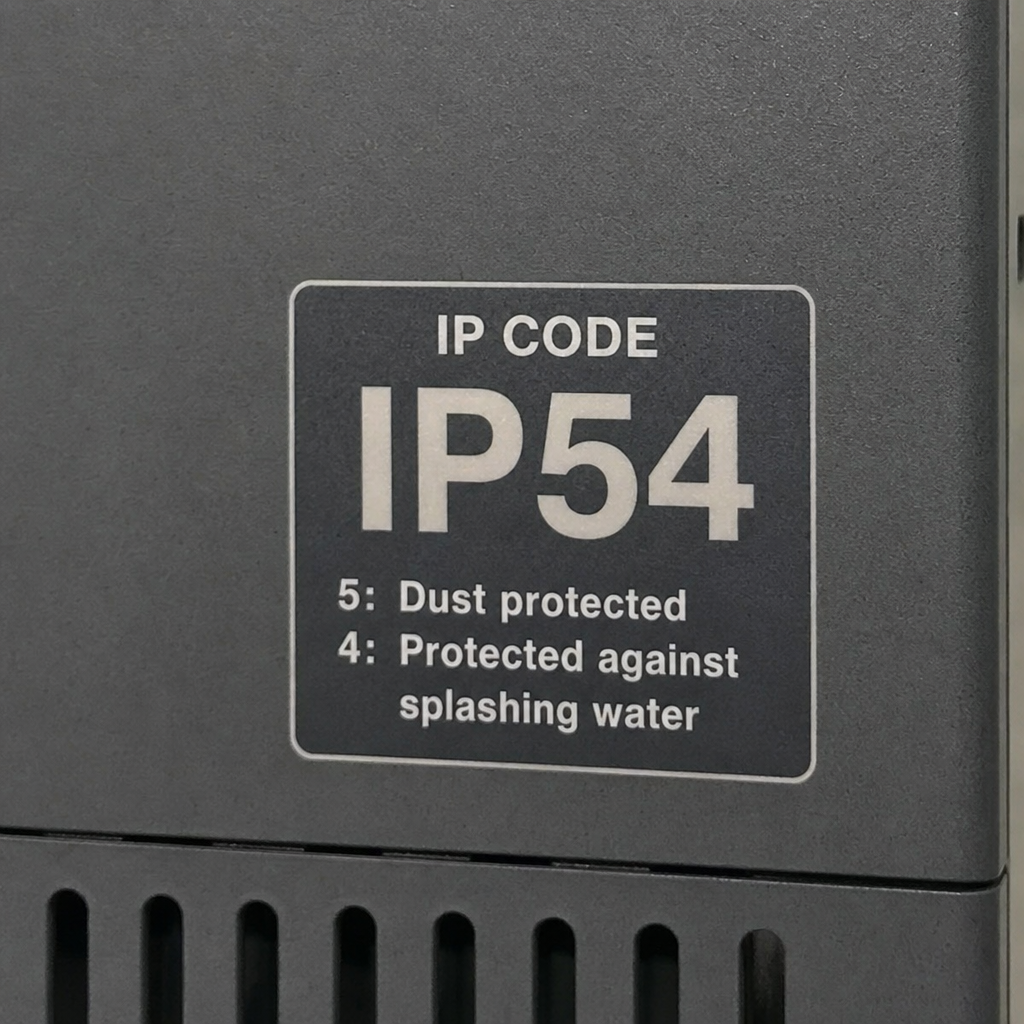
- IP54:Protection against limited dust ingress and splashing water, often considered for light industrial spaces with controlled exposure.
- IP55:Added resistance to water jets, useful where occasional hose-down or process spray may occur.
- IP65:Dust-tight protection plus water-jet resistance, often chosen for harsher factory zones.
- IP66:Dust-tight protection plus stronger water-jet resistance, useful where washdown intensity is higher.
- IP67 or higher:Consider only when temporary immersion or similar exposure is a credible risk.
Why do IP rating standards matter in drive reliability?
IP Rating Standards for Industrial Drive Devices matter because enclosure protection affects uptime, safety, and service life. A drive exposed to dust can suffer blocked cooling paths, conductive contamination, or premature component stress. A drive exposed to water can face corrosion, insulation breakdown, nuisance trips, or dangerous failures.
Understanding ip ratings also prevents overbuying. A very high rating may add cost, heat-management constraints, or installation complexity. The best specification balances ingress protection with cooling, access for service, cable sealing, and the actual severity of the site.
Matching GCS IP rating standards to the application
If your project documentation references gcs ip rating standards or another internal specification, treat it as the minimum project requirement and verify the exact code on the drive nameplate or datasheet. Internal standards are most useful when they define environments clearly, such as indoor cabinet, dusty conveyor line, outdoor sheltered area, or washdown zone.
Before selecting a drive, check:
- The enclosure IP rating in the manufacturer’s documentation.
- Whether the rating applies with covers closed and accessories installed.
- Cable glands, conduit entries, keypad kits, fans, and filters.
- Cleaning method, water pressure, chemicals, and spray direction.
- Ambient temperature and ventilation needs.
IP and NEMA ratings are not simple conversions
In the United States, buyers often compare IP ratings with NEMA enclosure types, but they are not direct equivalents. NEMA notes that it is not possible to state that an IP degree rating is equivalent to a NEMA Type designation, because the systems evaluate different requirements.(nema.org)
Use IP codes for ingress protection clarity, and use NEMA or UL-related enclosure requirements when the project, jurisdiction, or customer specification calls for them. When in doubt, require documented compliance rather than assuming one label replaces another.
Final selection guidance
The safest approach is to specify the lowest IP rating that fully covers the real exposure, then confirm that every installed accessory preserves that protection. For industrial drive devices, the enclosure, installation method, and maintenance practice all work together. A strong ip protection standards process turns a simple two-digit code into a reliable design decision.