Industrial drive systems keep production moving, but they only deliver dependable performance when maintenance is consistent, documented, and matched to the equipment. Learning how to maintain industrial drive systems to extend service life starts with a practical plan: inspect the right components, control operating conditions, protect equipment from contamination, and act before small issues become shutdowns. The goal is not more maintenance for its own sake; it is smarter industrial drive service that reduces avoidable wear and improves uptime.
What maintenance tasks prevent drive system failures?
The most reliable maintenance tasks are the ones that catch friction, heat, misalignment, contamination, and electrical stress early. A strong program combines scheduled preventive work with condition-based checks and, where the asset is critical enough, predictive monitoring. That mix helps teams avoid relying only on calendar dates while still keeping essential maintenance drive systems routines from being skipped.
Start with the basics: visual inspections, lubrication checks, temperature readings, vibration observations, fastener checks, and review of operating records. These actions sound simple, but they often reveal the first signs of trouble: oil leaks, damaged seals, unusual noise, hot housings, loose couplings, clogged vents, or dust buildup around cooling paths.
A practical routine should include:
- Daily operator observations:Listen for abnormal noise, watch for overheating, and report vibration, leaks, or slow response.
- Weekly inspection points:Check guards, seals, couplings, belts, vents, filters, and mounting hardware.
- Monthly maintenance reviews:Compare temperature, vibration, load, and run-time data against normal baselines.
- Scheduled service intervals:Follow manufacturer guidance for oil changes, filter replacements, calibration, alignment checks, and component adjustments.
- Shutdown inspections:Use planned downtime to inspect gear teeth, bearings, shafts, wiring, terminals, cooling fans, and enclosure condition.
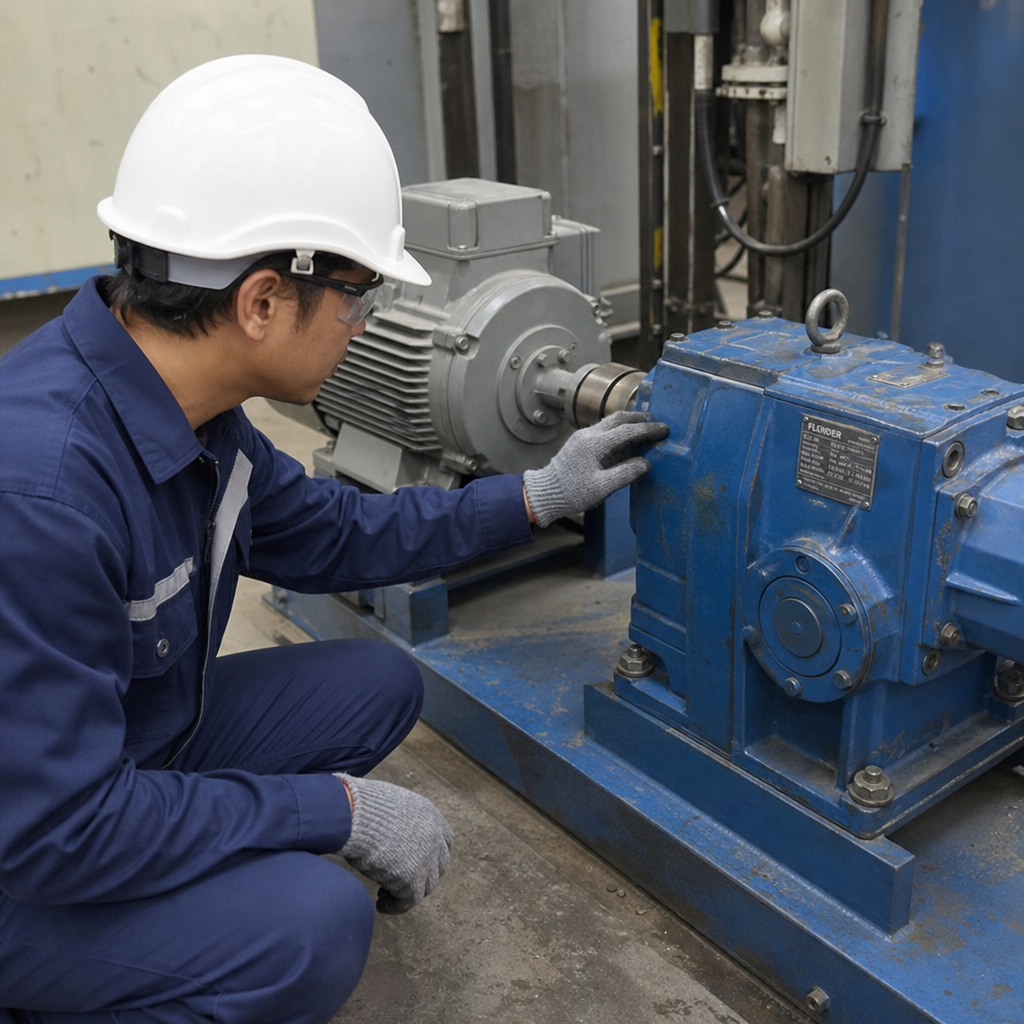
The key is consistency. A missed lubrication interval or ignored vibration trend may not cause immediate failure, but repeated neglect shortens bearing life, increases heat, and puts connected equipment under stress.
Lubrication protects gearboxes, bearings, and moving parts
Lubrication is one of the highest-impact maintenance best practices for gearboxes and mechanical drive components. The lubricant reduces friction, carries away heat, protects against corrosion, and helps prevent metal-to-metal contact. When it is incorrect, dirty, degraded, or applied in the wrong amount, the entire drive system becomes more vulnerable.
For gearboxes, always use the lubricant type and viscosity recommended for the application. Substituting oil without checking compatibility can affect film strength, seal performance, and operating temperature. Too little lubricant creates friction and heat; too much can cause foaming, pressure buildup, and leakage.
Good lubrication control includes:
- Confirming the correct lubricant for the gearbox, bearing, or drive component.
- Checking levels at the right operating condition, not by guesswork.
- Replacing oil or grease at recommended intervals.
- Keeping fill points, breathers, and containers clean.
- Watching for discoloration, burnt odor, metal particles, or water contamination.
- Recording lubricant changes so patterns are easy to spot later.
In dusty, wet, or high-temperature environments, lubrication may need closer attention. Contaminants can enter through worn seals, open breathers, careless handling, or poor storage. Clean transfer tools and sealed containers are small details that make a real difference.
How do temperature and vibration reveal hidden problems?
Temperature and vibration reveal hidden problems because they change when friction, load, alignment, or balance changes. A gearbox, motor, servo drive, or coupling may continue operating while internal wear is developing, but heat and vibration often rise before visible failure occurs. Establishing a normal baseline makes these changes easier to interpret.
Temperature monitoring can identify overloaded drives, inadequate lubrication, clogged cooling passages, failing bearings, or poor ventilation. A single warm reading may not prove failure, but a rising trend deserves investigation. Compare readings under similar load and ambient conditions whenever possible.
Vibration monitoring is equally valuable for rotating equipment. Increased vibration can point to misalignment, imbalance, looseness, bearing wear, gear damage, or foundation problems. Teams do not always need advanced sensors on every asset, but critical drives often justify continuous or periodic vibration analysis.
Useful monitoring habits include:
- Take readings from the same points each time.
- Record load conditions when measurements are taken.
- Investigate sudden changes instead of waiting for alarms.
- Compare similar machines to identify abnormal behavior.
- Combine data with human observations, such as sound, smell, and visible movement.
Predictive tools can be especially useful when downtime is expensive or access is difficult. Sensors, data logging, and trend analysis help maintenance teams plan service before failure, but they work best when paired with trained interpretation and clear response procedures.
Electrical stability matters for servo drives
Servo drives require attention beyond mechanical wear. Their performance depends on clean power, good grounding, proper cooling, and sound connections. Voltage spikes, poor grounding, loose terminals, electrical noise, and heat can all create intermittent faults that are difficult to diagnose after the fact.
For servo-driven equipment, maintenance should include regular checks of cabinets, cables, connectors, fans, filters, and grounding points. Keep enclosures clean and dry, and do not allow dust to block cooling airflow. If the application is exposed to unstable power or switching noise, protective devices such as surge protection, proper grounding, and line reactors may help reduce electrical stress when specified for the system.
Teams should also review fault logs instead of simply resetting alarms. Repeated overcurrent, overtemperature, following error, or communication faults usually indicate a condition that needs correction. Treating the alarm history as maintenance data helps prevent recurring failures.
Environmental control extends service life
Industrial drive systems rarely fail in perfect laboratory conditions. They operate near heat, dust, washdown, vibration, chemicals, humidity, or airborne debris. Environmental protection is therefore part of maintenance, not an afterthought.
Dust-prone facilities should prioritize sealed enclosures, clean cooling paths, filter replacement, and regular inspection of breathers and vents. High-temperature areas need careful attention to ventilation, lubricant condition, and component ratings. Wet or corrosive environments call for better sealing, corrosion checks, and careful cable and connector protection.
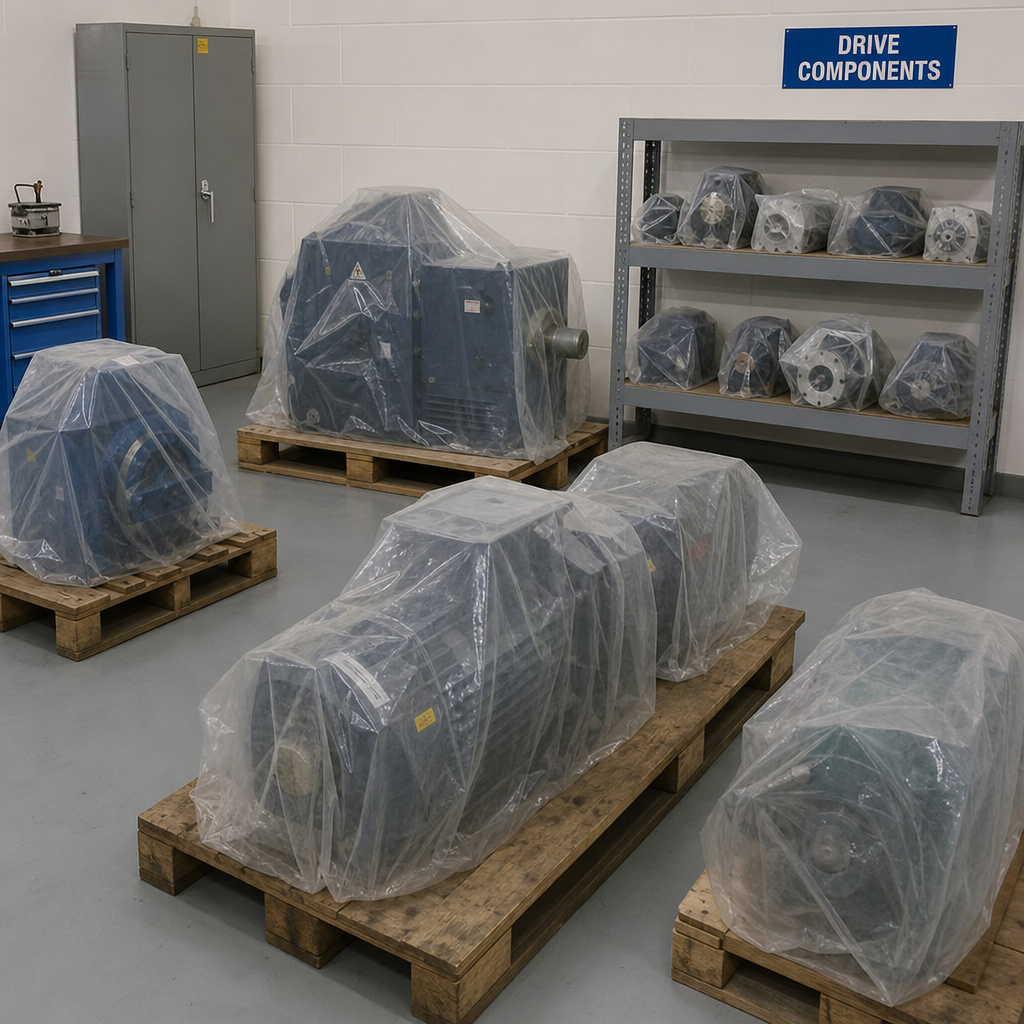
Storage and transport also matter. Drives, gearboxes, and related components can corrode or become contaminated while sitting idle, especially if they are uncovered or exposed to moisture. When equipment is removed from service, stored as a spare, or moved between facilities, use appropriate covers, protect machined surfaces, seal openings, and follow storage instructions.
Documentation turns maintenance into a system
A maintenance program becomes more effective when records are easy to use. Without documentation, teams depend on memory, and recurring issues get treated as isolated events. With organized records, maintenance drive systems decisions become faster and more accurate.
Track the essentials:
- Asset identification and locati0n
- Manufacturer service recommendations
- Lubricant type, quantity, and change dates
- Inspection results and measurements
- Temperature and vibration trends
- Fault codes and corrective actions
- Parts replaced and work performed
- Operating conditions during failures
These records help teams adjust intervals, justify spare parts, and decide where predictive tools are worth the investment. A drive that repeatedly overheats, for example, may need more than another bearing replacement; it may need load review, ventilation improvements, alignment correction, or environmental changes.
Training supports better inspections and fewer mistakes
Even the best checklist fails if people do not know what they are looking for. Operators are often the first to notice subtle changes in sound, response, smell, or temperature. Maintenance technicians then need the knowledge to connect those signs to likely causes and safe next steps.
Training should cover normal operating behavior, safe lockout procedures, inspection points, lubrication handling, alarm reporting, and when to stop equipment. It should also explain why procedures matter. When people understand that over-lubrication can be harmful, or that resetting a recurring servo alarm hides useful evidence, they make better choices.
Clear communication between operations and maintenance is just as important. A simple reporting process can prevent vague notes like “machine acting strange” and replace them with useful detail about when the issue started, what changed, and what conditions were present.
A practical maintenance checklist for drive systems
Use this checklist as a starting point and adapt it to the equipment manufacturer’s instructions and your facility conditions:
- Inspect for leaks, corrosion, damaged guards, loose mounts, and contamination.
- Verify lubricant level, condition, type, and replacement schedule.
- Check alignment, coupling condition, belts, shafts, and fasteners.
- Monitor temperature and compare it with established baselines.
- Monitor vibration and investigate changes early.
- Keep motors, gearboxes, servo drives, and control cabinets clean and ventilated.
- Review servo drive fault logs and electrical connections.
- Protect idle, stored, or transported equipment from moisture and debris.
- Record inspections, repairs, readings, and operating conditions.
- Train operators to report abnormal conditions quickly and clearly.
The strongest programs are proactive
Effective industrial drive service is not built on emergency repairs. It comes from steady inspection, correct lubrication, environmental control, electrical care, accurate records, and trained people who know when something is changing. By applying these maintenance best practices consistently, facilities can extend service life, reduce preventable downtime, and get more value from the drive systems that keep production running.