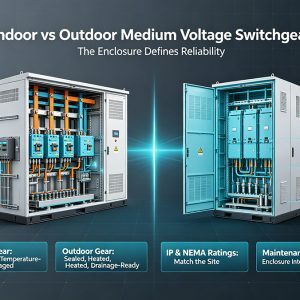
Choosing between indoor and outdoor medium voltage switchgear is not just a space-planning decision. It affects enclosure design, temperature control, moisture protection, maintenance frequency, installation cost, and long-term reliability. The right choice matches the equipment to the environment so your electrical switchgear systems can protect people, assets, and power distribution without being weakened by heat, dust, rain, corrosion, or condensation.
What is the main difference between indoor and outdoor medium voltage switchgear?
The main difference is environmental protection. Indoor medium voltage switchgear is built for installation inside a controlled electrical room, while outdoor switchgear is built to withstand weather, sunlight, moisture, wind-driven debris, temperature swings, and sometimes corrosive air. Both can perform the same core electrical functions, but their enclosures, ventilation, insulation support, accessories, and maintenance needs are very different.
Indoor equipment typically depends on the building around it. A clean, dry, temperature-managed room helps preserve breakers, bus bars, relays, meters, cable terminations, and insulation systems. Outdoor equipment has to create its own protective boundary, which means heavier-duty enclosures, seals, heaters, drainage features, UV-resistant materials, and corrosion-resistant finishes.
That is why the Difference Between Indoor and Outdoor Medium Voltage Switchgear should be evaluated early in a project, not after the one-line diagram is complete. Location drives many practical choices that affect service life and safety.
Design and construction differences that matter
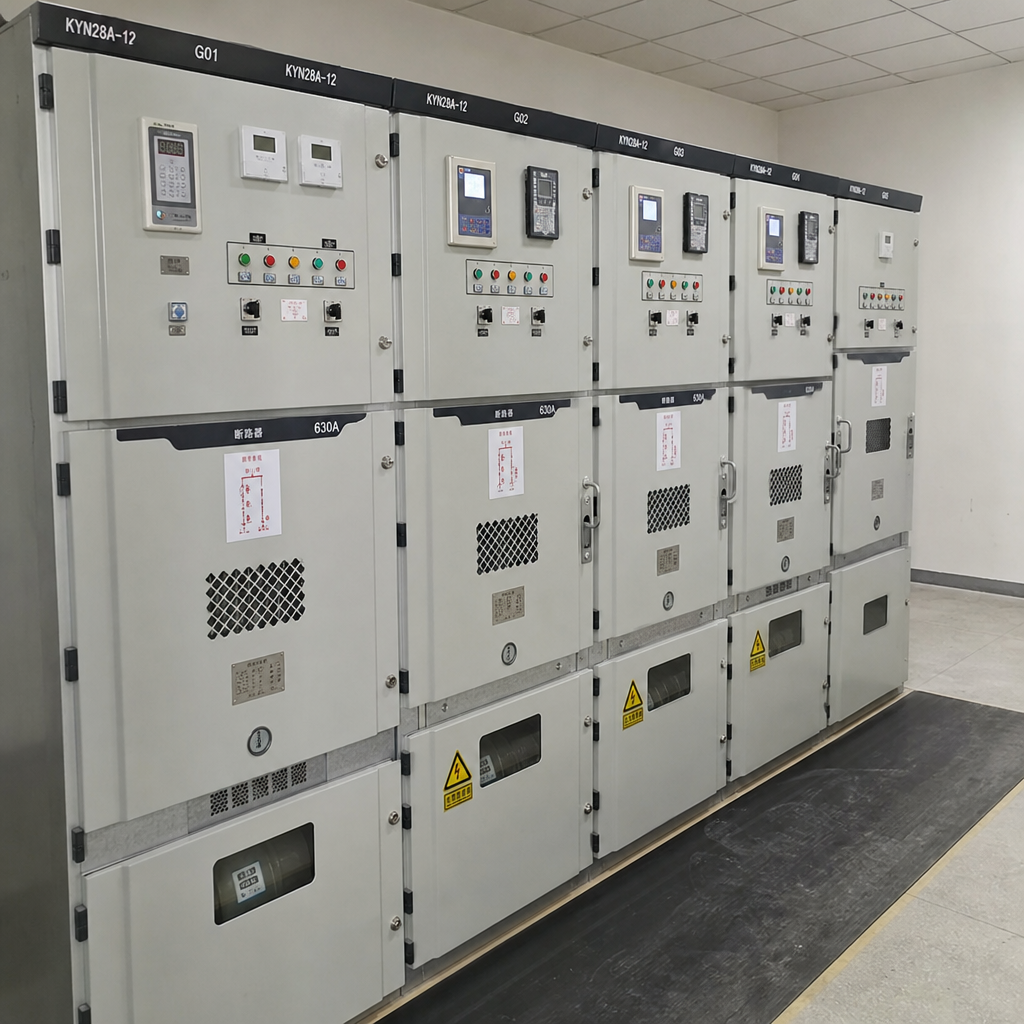
Indoor switchgear is usually designed with easier access, cleaner airflow, and less aggressive environmental protection. Enclosures may include ventilation openings because the surrounding room helps manage heat and humidity. This can make inspection and maintenance more straightforward, provided the electrical room stays clean, dry, and secure.
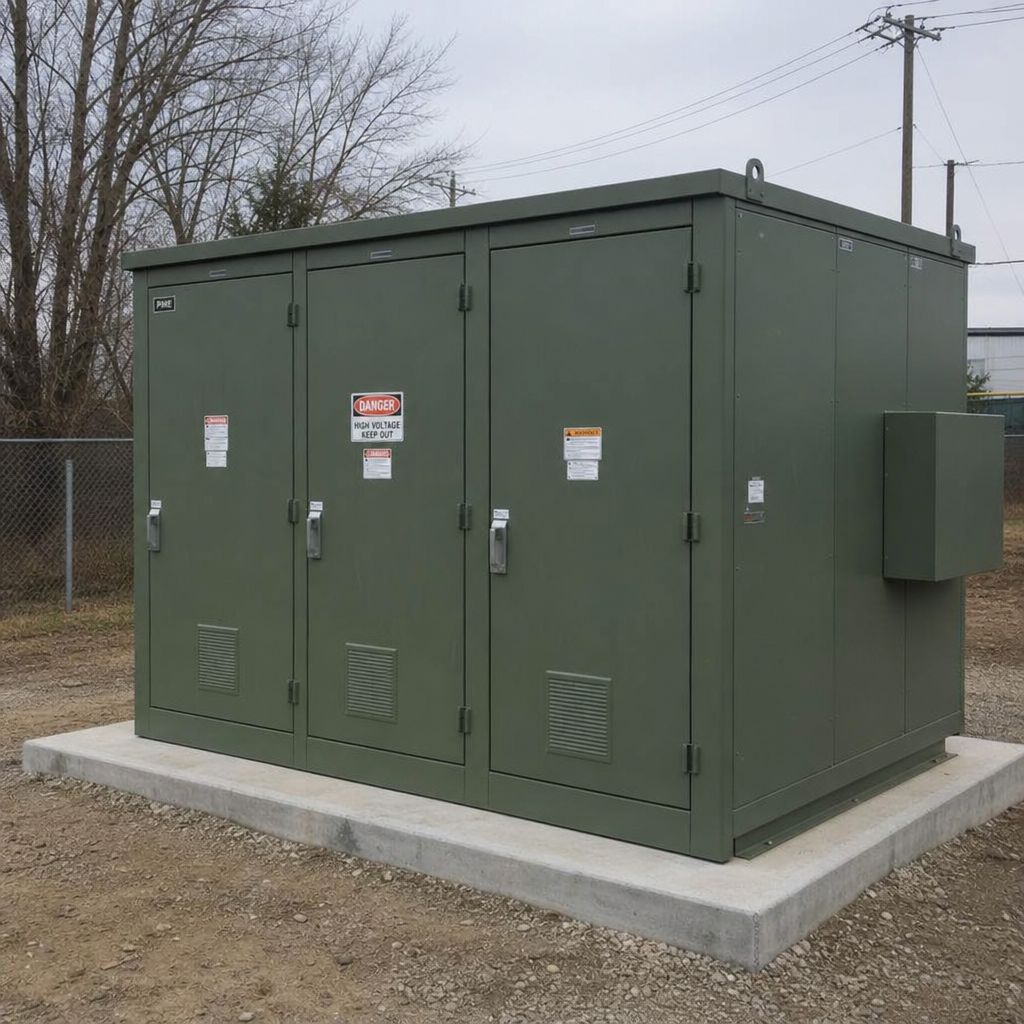
Outdoor switchgear uses a more rugged construction approach. Cabinets are commonly sealed or semi-sealed against rain, dust, and windblown contaminants. Because sealed metal enclosures can trap heat and moisture, outdoor designs often include thermostatically controlled heaters, anti-condensation measures, sun shields, filters where appropriate, and drainage paths.
Key design factors include:
- Enclosure strength:Outdoor units need stronger weather-resistant housings and doors that close securely over time.
- Gaskets and seals:These are critical outdoors because a failed gasket can allow moisture into energized compartments.
- Corrosion protection:Outdoor medium voltage equipment may require stainless steel, aluminum, galvanized steel, specialized coatings, or other corrosion-resistant options depending on the site.
- Ventilation strategy:Indoor gear can often rely more on room conditions, while outdoor gear must balance cooling with protection from water and dust.
- Condensation control:Outdoor temperature swings can create moisture inside the enclosure even when rain does not directly enter.
The electrical purpose remains similar: isolate circuits, interrupt faults, protect transformers and feeders, and support reliable distribution. The enclosure and environmental package are what separate the two applications.
How do IP and NEMA ratings affect the choice?
IP and NEMA ratings help describe how well an enclosure protects internal components from solids, water, and environmental exposure. Indoor switchgear may use lower enclosure ratings because it is protected by the building, while outdoor switchgear needs higher ratings suited for rain, dust, hose-directed water, corrosion, or harsh industrial conditions. These ratings should be selected based on the actual site, not just whether the equipment is “inside” or “outside.”
For example, indoor electrical switchgear systems in a dry utility room may only need protection from incidental contact and limited dust. In contrast, outdoor gear at a substation, wastewater facility, coastal site, mine, or manufacturing yard may face rain, airborne particles, chemical vapors, salt air, or extreme temperature cycles.
A practical switchgear installation guide should treat ratings as a starting point and then ask site-specific questions:
- Will the equipment be exposed to rain, snow, sleet, or direct sunlight?
- Is the environment dusty, sandy, humid, corrosive, or chemically contaminated?
- Will water come from sprinklers, washdown, flooding, or wind-driven storms?
- Are insects, rodents, or nesting debris a realistic concern?
- Can the room or enclosure maintain suitable temperature and humidity over the equipment’s life?
One common mistake is assuming an indoor room is automatically benign. Poor ventilation, roof leaks, construction dust, and uncontrolled humidity can make an indoor locati0n hostile to medium voltage switchgear. Another mistake is choosing outdoor-rated equipment without considering heat buildup inside sealed enclosures, especially where direct sun and high load currents occur together.
Installation conditions shape long-term reliability
Switchgear selection should begin with the load and protection requirements, but the installation environment determines whether the equipment can perform reliably over time. A data center electrical room, for instance, may prioritize clean access, climate control, arc-resistant construction, and coordinated maintenance windows. A utility substation exposed to weather and pollution may prioritize enclosure integrity, corrosion resistance, heaters, drainage, and external clearances.
Indoor installations usually require careful room planning. There must be working clearance, access for breaker racking, safe cable routing, adequate lighting, grounding, fire protection coordination, and room ventilation. The building should also limit water intrusion from pipes, roofs, drains, and nearby process systems.
Outdoor installations add more variables. Pad elevation, anchoring, wind exposure, sun orientation, conduit sealing, pest prevention, and access during bad weather all matter. If the site is prone to standing water, blowing dust, salt fog, or industrial contamination, those conditions should influence the enclosure rating and material specification before procurement.
A simple decision framework can help:
- Choose indoor switchgearwhen a secure, clean, dry, climate-managed electrical room is available and long-term room conditions can be controlled.
- Choose outdoor switchgearwhen equipment must be close to loads, transformers, substations, or process areas where no suitable building exists.
- Consider outdoor-rated gear indoorsonly when the indoor environment is unusually harsh, such as high humidity, dust, or washdown exposure.
- Avoid indoor-rated gear outdoorsunless it is housed in a properly engineered protective structure that truly provides an indoor-like environment.
Maintenance needs are not the same
Indoor and outdoor switchgear both need planned inspection, cleaning, testing, and documentation. However, outdoor equipment usually demands closer attention because the environment attacks the enclosure and components continuously. Rain, UV exposure, thermal cycling, dust, insects, and corrosion can turn small issues into major failures if they are missed.
Useful switchgear maintenance tips include:
- Inspect enclosure doors, hinges, latches, and gaskets.Outdoor gaskets can harden, crack, compress, or pull away, allowing moisture entry.
- Look for condensation.Water droplets, rust stains, cloudy viewing windows, or musty odors can indicate heater or ventilation problems.
- Clean dust and debris carefully.Contamination can reduce insulation performance and increase tracking risk, especially around medium voltage equipment.
- Check space heaters and thermostats.Outdoor cabinets often depend on them to prevent internal moisture buildup.
- Watch for corrosion.Surface rust, pitting, swollen hardware, and discolored terminals should be addressed before they spread.
- Verify ventilation and filters.Indoor rooms and outdoor enclosures both need thermal paths that are not blocked by dust, packaging, nests, or stored materials.
- Keep records.Photos, test results, torque checks, infrared scans, and inspection notes make it easier to spot deterioration over time.
Indoor switchgear maintenance often focuses on cleanliness, mechanical operation, relay testing, breaker condition, insulation checks, and the health of the electrical room. Outdoor maintenance includes all of that plus enclosure preservation. The harder the environment, the more disciplined the maintenance program must be.
Insulation and interrupting technology still matter
Environmental protection is only one part of the specification. Medium voltage switchgear also needs appropriate interrupting ratings, short-circuit ratings, continuous current ratings, control power arrangements, protection relays, and insulation systems. Technologies such as vacuum interrupters, solid dielectric insulation, gas-insulated designs, and air-insulated compartments may appear in either indoor or outdoor applications, depending on the project.
The important point is that electrical capability and environmental suitability must work together. A switchgear lineup can have the right interrupting rating and still be wrong for the site if its enclosure cannot handle moisture or contamination. Likewise, a rugged outdoor cabinet does not solve a poor coordination study, inadequate grounding, or insufficient working clearance.
This is where collaboration matters. Engineers, contractors, facility teams, and manufacturers should confirm the service conditions, ratings, access needs, protection strategy, and maintenance expectations before equipment is ordered.
Practical takeaway for better switchgear decisions
Indoor switchgear is best suited to controlled spaces that protect the equipment from weather and contamination. Outdoor switchgear is engineered to survive harsher exposure, but it brings additional requirements for sealing, heating, corrosion prevention, thermal management, and inspection. The best choice is the one that fits the actual environment, not the most convenient label.
If you are planning a new installation or reviewing existing electrical switchgear systems, start with the site conditions. Then match enclosure ratings, materials, ventilation, insulation, access, and maintenance practices to those conditions. That approach reduces avoidable failures, supports safer operation, and helps medium voltage switchgear deliver the reliability it was designed to provide.