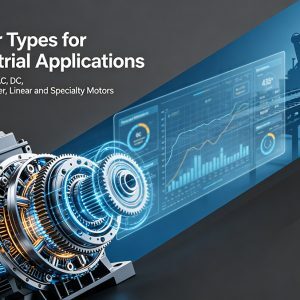
Industrial motors convert electrical energy into controlled mechanical motion for pumps, conveyors, compressors, fans, machine tools, hoists, mixers, and automated production equipment. Choosing the right motor starts with understanding how industrial motor classification types are grouped by power supply, construction, motion control, enclosure, duty cycle, and application environment. This guide explains the major electric motor types in practical terms so engineers, buyers, maintenance teams, and plant managers can narrow the options with more confidence.
What are the main types of industrial motors?
The main types of industrial motors are AC motors, DC motors, servo motors, stepper motors, linear motors, gear motors, and specialized motors designed for hazardous, hygienic, or high-efficiency environments. In most industrial facilities, AC induction motors are the most common workhorses because they are rugged, relatively simple, and well suited to continuous-duty equipment. More advanced motion applications often use servo, stepper, or variable-speed motor systems when position, torque, or speed must be controlled precisely.
A useful way to think about industrial standard motor types is to separate them into two broad groups: motors that mainly provide rotation and motors that provide controlled motion. A pump may only need reliable rotation at a set speed, while a robotic axis may need repeatable acceleration, stopping, and position feedback. Both are motors, but the selection criteria are very different.
AC motors as the industrial workhorse
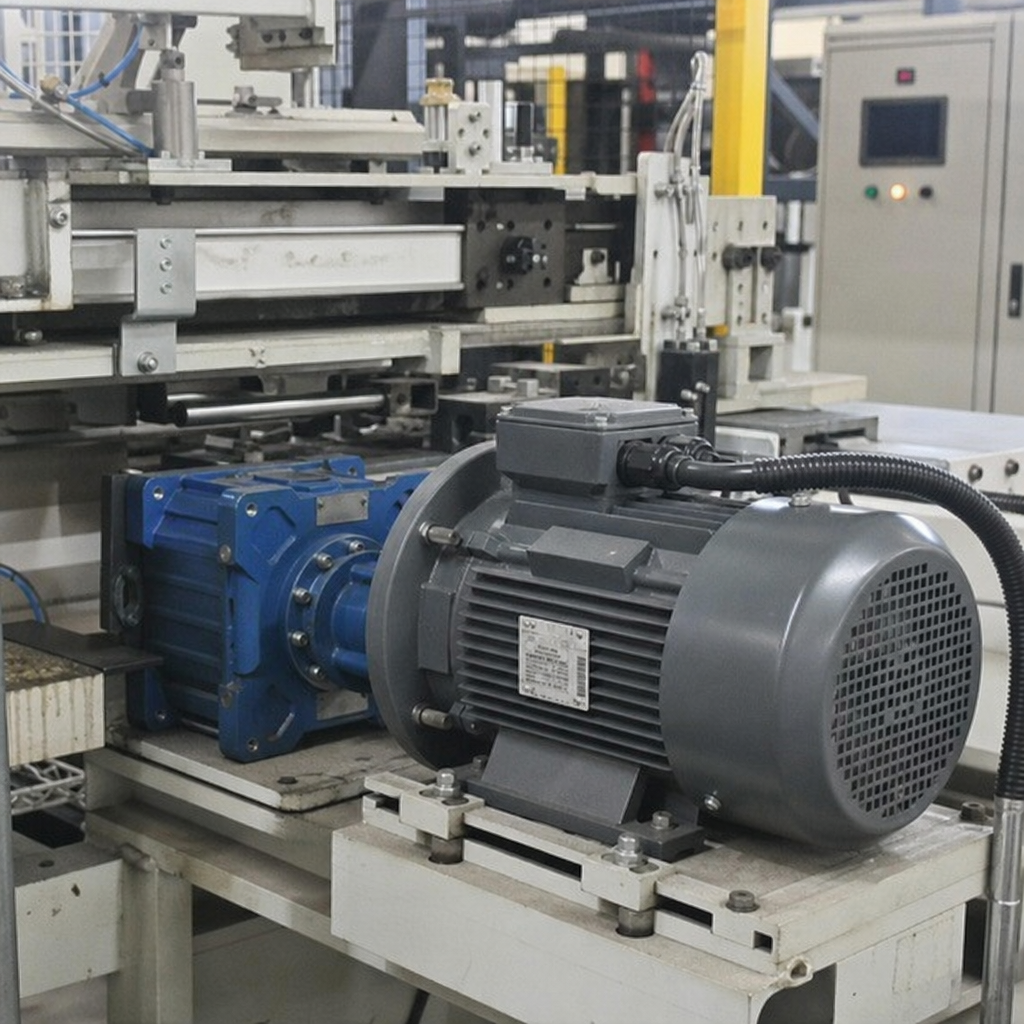
AC motors run on alternating current and are widely used across factories, utilities, processing plants, warehouses, and heavy equipment systems. They are available in many frame sizes, speeds, mounting styles, and enclosure designs, making them one of the broadest categories in any industrial motor classification. When people refer to industrial electrical motor actuators in general production environments, they are often talking about AC motors connected to drives, gearboxes, pumps, valves, or mechanical linkages.
AC induction motors
Induction motors are the standard choice for many continuous industrial loads. They use electromagnetic induction to create rotor motion, which means there are no brushes required for normal operation. This makes them durable and comparatively low maintenance for fans, blowers, compressors, crushers, conveyors, and process equipment.
The two common subtypes are squirrel-cage and wound-rotor induction motors. Squirrel-cage motors are simpler and more common, while wound-rotor designs may be selected where high starting torque or controlled acceleration is needed. When paired with a variable frequency drive, an induction motor can provide adjustable speed, softer starts, and better process control.
Synchronous AC motors
Synchronous motors rotate in step with the frequency of the power supply. They are often chosen when constant speed is important, especially in larger industrial systems. Some synchronous designs also help improve power factor, which can matter in facilities with large electrical loads.
Permanent magnet synchronous motors are increasingly used where high efficiency and compact size are valuable. They may require electronic controls, but they can deliver strong performance in demanding variable-speed applications.
DC motors and controlled torque applications
DC motors run on direct current and are valued for smooth speed control and strong starting torque. Although many traditional DC applications have shifted toward AC motors with electronic drives, DC motors still appear in hoists, cranes, traction systems, test stands, battery-powered equipment, and retrofit installations.
Brushed DC motors use brushes and a commutator to switch current. They are easy to control but require brush maintenance. Brushless DC motors use electronic commutation instead, reducing wear and improving reliability in applications where compact size, efficiency, or controllability matters.
Key DC motor advantages include:
- Strong torque at low speed for starting heavy loads
- Straightforward speed control in many drive systems
- Good response in variable-load applications
- Practical use in battery or rectified-power systems
The tradeoff is that brushed designs need periodic maintenance, and brushless designs require suitable electronic controls.
Motion-control motors for automation
Not every industrial motor is selected only for horsepower and speed. Automated machinery often needs controlled movement, repeatability, feedback, and fast response. That is where servo motors, stepper motors, and linear motors become important types of motors in industrial automation.
Servo motors
Servo motors are used when precise position, speed, or torque control is required. A servo system typically includes the motor, a drive, and feedback from an encoder or resolver. This closed-loop control allows the system to correct motion in real time.
Common applications include robotics, CNC machinery, packaging equipment, printing systems, pick-and-place machines, and automated inspection systems. Servo systems can be more complex than standard motors, but they are often the right choice when accuracy and dynamic response affect product quality or throughput.
Stepper motors
Stepper motors move in discrete increments, or steps. They are commonly used in lower-power positioning systems where predictable movement is needed without the full cost or complexity of a servo system. Examples include indexing tables, small actuators, labeling equipment, laboratory machines, and light-duty automation.
A stepper motor can hold position well, but it may lose steps if overloaded unless feedback is added. For this reason, stepper systems should be selected carefully when load changes, acceleration, or high-speed performance are critical.
Linear motors
Linear motors create motion in a straight line rather than through a rotating shaft. They are useful in high-speed positioning, precision stages, automated transport, and applications where eliminating belts, screws, or mechanical conversion improves responsiveness. They can reduce mechanical wear, but they require careful design around guidance, feedback, and control.
How should industrial motors be classified for selection?
Industrial motors should be classified by the job they must perform, not by name alone. A complete classification considers power source, motion type, load behavior, environment, control method, mounting arrangement, efficiency needs, and maintenance expectations. This prevents a common mistake: choosing a motor that fits the horsepower requirement but fails in the real operating conditions.
Use this practical checklist before comparing models:
- Define the load.Identify whether the equipment starts under load, runs continuously, reverses often, or experiences shock loads.
- Confirm speed and torque needs.Note normal speed, starting torque, peak torque, and whether speed variation is required.
- Review the power supply.Check voltage, phase, frequency, available current, and compatibility with drives or controls.
- Match the duty cycle.Continuous-duty equipment needs different thermal capacity than intermittent or cyclic operation.
- Evaluate the environment.Dust, moisture, washdown, chemicals, heat, vibration, and hazardous areas affect enclosure and insulation choices.
- Plan the control method.Decide whether simple across-the-line starting, soft starting, variable frequency control, servo control, or feedback is needed.
- Consider maintenance access.A motor in a hard-to-reach locati0n may justify a more robust or lower-maintenance design.
Enclosure, mounting, and duty ratings matter
Mechanical and environmental details can be just as important as the basic electric motor types. A motor that performs well in a clean, dry room may fail early in a dusty mill, wet processing area, or outdoor installation. Enclosure selection helps protect the internal components from contaminants and operating conditions.
Common considerations include open or ventilated designs for clean locations, totally enclosed motors for harsher environments, and washdown or corrosion-resistant designs for food, beverage, pharmaceutical, or chemical areas. Hazardous locations may require motors designed for specific explosive gas, vapor, or dust risks. Always match the motor to the site requirements rather than assuming a general-purpose motor is acceptable.
Mounting style also affects fit and serviceability. Foot-mounted, flange-mounted, face-mounted, vertical, and gearbox-integrated arrangements each suit different machinery layouts. Shaft size, coupling style, alignment, and bearing loads should be reviewed before purchase, especially when replacing an existing unit.
Specialty industrial motor categories
Some industrial applications need motors designed around a specific constraint. Gear motors combine a motor and gearbox to reduce speed while increasing output torque. Explosion-proof or hazardous-locati0n motors are used where ignition risks must be managed. Stainless steel or washdown motors support sanitary cleaning. Brake motors hold or stop loads in hoists, lifts, conveyors, and positioning systems.
Other specialized options include high-efficiency motors for energy-conscious facilities, inverter-duty motors for variable frequency drive operation, and high-temperature or severe-duty motors for difficult environments. These categories overlap with the main motor families, so the final choice often combines several classifications, such as an inverter-duty AC induction motor with a totally enclosed severe-duty enclosure.
Choosing the right motor type
The best motor is the one that matches the application’s mechanical load, control needs, environment, and maintenance strategy. Start with the machine’s purpose, then narrow the selection by speed, torque, power supply, duty cycle, enclosure, and control requirements. This approach is more reliable than choosing from a generic list of types of industrial electrical motor actuators without understanding the actual operating conditions.
For simple continuous rotation, an AC induction motor may be the practical default. For precise automation, a servo or stepper system may be more appropriate. For battery-powered, torque-sensitive, or legacy controlled systems, a DC motor may still be the right answer. A complete industrial motor classification should always connect the motor type to the work it must do, because performance, reliability, safety, and lifecycle cost all depend on that match.