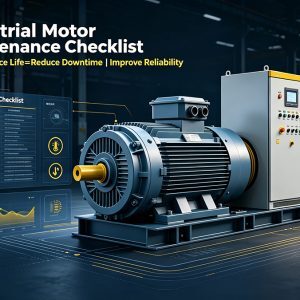
Industrial motors work hard, often in tough environments where heat, dust, vibration, and load changes can shorten service life. A practical Industrial Motor Maintenance Checklist to Extend Service Life helps teams catch small issues before they become expensive failures. With the right preventive maintenance tips and a consistent motor maintenance schedule, you can improve reliability, reduce downtime, and protect critical production equipment.
Why does routine motor maintenance matter?
Routine motor maintenance matters because most motor problems develop gradually. Bearings wear, electrical connections loosen, insulation weakens, and airflow becomes restricted long before a motor stops running. A clear maintenance checklist gives technicians a repeatable way to inspect, clean, test, and document motor condition so decisions are based on evidence, not guesswork.
Good maintenance also supports safer operation. Overheating, unusual noise, excess vibration, or burnt odors can indicate developing hazards. When these signs are caught early, industrial motor service can often be planned during scheduled downtime instead of handled as an emergency.
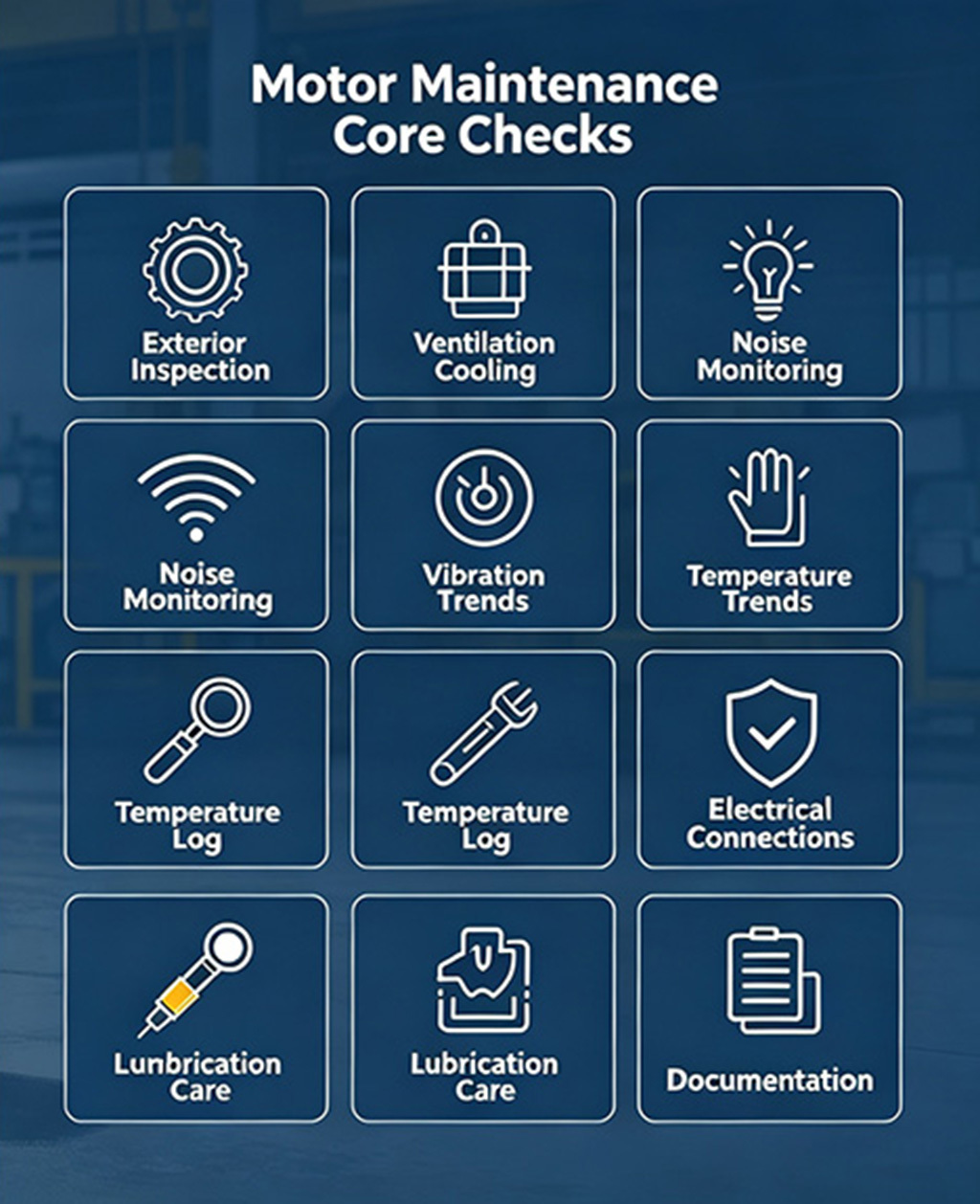
Core checks for your equipment maintenance list
Every facility is different, but most industrial motors benefit from a standard equipment maintenance list that covers visual, mechanical, electrical, and environmental conditions. The goal is not just to “look things over,” but to verify that the motor is operating within normal expectations.
Use this practical checklist as a starting point:
- Inspect the motor exterior:Look for dust buildup, oil, corrosion, loose guards, damaged conduit, or signs of overheating.
- Check ventilation and cooling:Clear blocked vents, confirm fans are intact, and make sure surrounding space allows proper airflow.
- Listen for abnormal sounds:Grinding, squealing, rattling, or knocking may point to bearing wear, misalignment, or loose components.
- Monitor vibration:Compare current vibration levels with past readings when available. Increasing vibration can signal imbalance or coupling problems.
- Review operating temperature:A motor running hotter than usual may be overloaded, under-ventilated, or experiencing electrical issues.
- Examine electrical connections:Look for loose terminals, damaged insulation, discoloration, or moisture inside junction boxes.
- Lubricate correctly:Follow manufacturer guidance for lubricant type, amount, and interval. Over-lubrication can be as harmful as neglect.
- Document findings:Record readings, observations, repairs, and dates so trends are easy to spot.
Building a realistic motor maintenance schedule
A strong motor maintenance schedule should match the motor’s duty cycle, environment, age, and importance to operations. Motors exposed to dust, moisture, heat, frequent starts, or heavy loads usually need more frequent attention than units in clean, stable conditions.
As a general planning framework:
- Daily or shift-based checks:Listen for noise, watch for overheating, and note visible damage or leaks.
- Monthly checks:Clean exterior surfaces, inspect ventilation, check mounting hardware, and review operating conditions.
- Quarterly checks:Verify alignment, review vibration trends, inspect electrical connections, and confirm lubrication needs.
- Annual checks:Perform deeper testing, review insulation condition, evaluate bearings, and update maintenance records.
These motor maintenance tips work best when they are assigned to specific people and tracked in a maintenance system. If nobody owns the task, even the best checklist can be missed.
When should you schedule industrial motor service?
Schedule industrial motor service when inspections reveal rising vibration, repeated overheating, abnormal current draw, bearing noise, insulation concerns, or recurring performance issues. Service is also wise after environmental incidents such as flooding, contamination, or prolonged exposure to extreme heat. Planned service helps prevent secondary damage to couplings, drives, pumps, fans, and connected machinery.
Do not wait for complete failure if the motor supports a critical process. A controlled repair window is almost always easier to manage than an unexpected shutdown.
Final takeaway
A dependable maintenance checklist turns motor care into a consistent habit rather than a reaction to breakdowns. Start with the basics, record what you find, and adjust inspection frequency based on real operating conditions. With practical preventive maintenance tips and a disciplined schedule, your team can extend motor service life and keep production moving with fewer surprises.