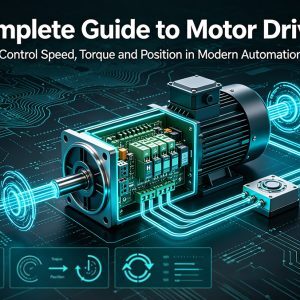
Motor drives are the link between electrical power and controlled motion. In industrial automation, they help machines start, stop, accelerate, hold position, regulate torque, and run at the speed a process actually needs. This article gives a practical overview of electric motor drives, with special attention to servo motor drives and where they fit among today’s motor control systems.
What are motor drives in industrial automation?
Motor drives are electronic devices that control how a motor receives power, so the connected machine can move with the right speed, torque, direction, and timing. Instead of simply switching a motor on or off, industrial motor drives shape the electrical output to match the task. That makes them essential in applications where uncontrolled motion would waste energy, damage products, reduce accuracy, or create safety concerns.
A drive may be used for something simple, such as slowing a conveyor when production changes, or something highly dynamic, such as controlling a robot arm that must move quickly and stop precisely. The better the drive matches the motor and application, the more predictable the machine becomes.
The main job of drive technology is controlled power
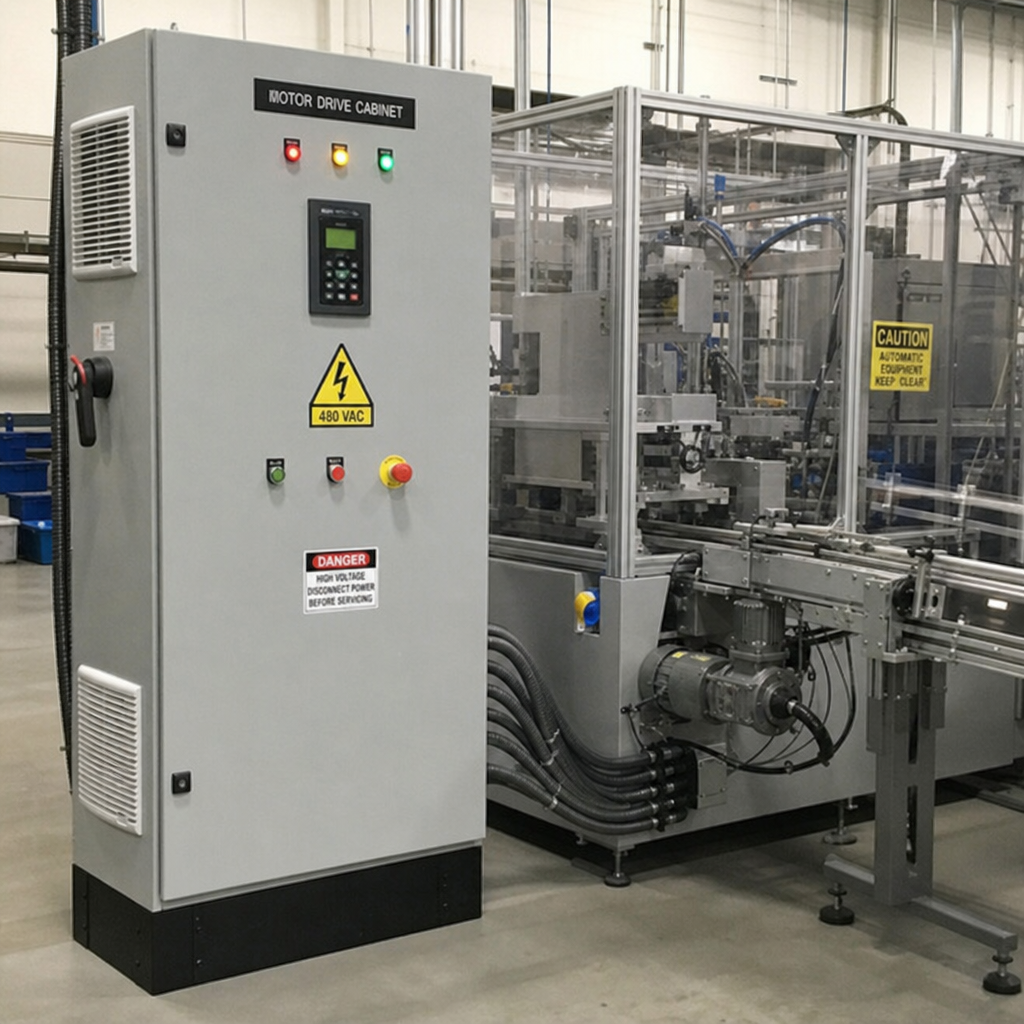
At its core, drive technology is about converting and regulating electrical power. The drive takes input power, processes it through power electronics, and sends a controlled output to the motor. Depending on the type of drive, that output may adjust voltage, frequency, current, pulse timing, or a combination of these.
In practical terms, motor drives help control:
- Speed:keeping a pump, fan, conveyor, spindle, or axis running at the required rate.
- Torque:delivering enough rotational force for acceleration, lifting, cutting, pressing, or holding.
- Position:moving to a defined point and stopping there accurately.
- Direction:reversing or sequencing motion without mechanical changes.
- Acceleration and deceleration:reducing shock, vibration, and wear during starts and stops.
Many variable speed drives focus mainly on speed regulation. Servo systems go further by coordinating speed, torque, and position through feedback, which is why they are common in precision automation.
How do servo motor drives differ from AC, DC, and stepper drives?
Servo motor drives differ because they are designed for closed-loop precision control, not just basic motor rotation. A DC drive typically regulates motor speed by adjusting voltage. An AC drive commonly adjusts frequency and voltage to control an AC motor. A stepper drive moves a stepper motor in increments, often for lower-cost positioning tasks.
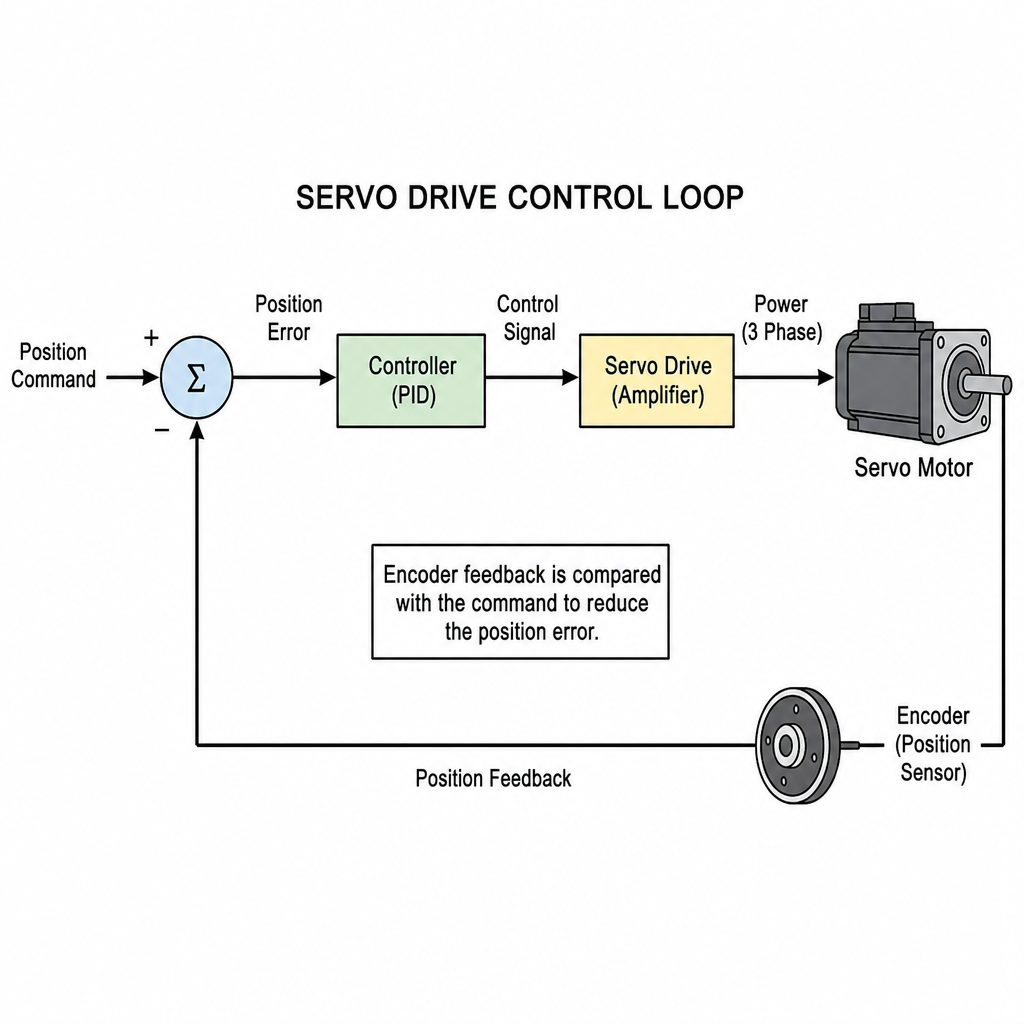
Servo motor drives, by contrast, continuously compare commanded motion with actual motion. Sensors such as encoders or Hall-effect devices report rotor position, speed, and sometimes direction back to the controller. The drive then corrects output in real time so the motor follows the commanded profile more accurately, even when load conditions change.
That feedback loop is the major difference. A stepper system may be suitable for simpler indexing where loads are predictable. A servo system is usually preferred when the machine needs fast response, accurate stopping, smooth motion, or torque control under changing loads.
Key components inside modern motor control systems
A complete motor control system is more than a drive box mounted in a cabinet. It is a coordinated set of devices that turn a motion command into reliable machine movement.
Important components include:
- Motor:the device that converts electrical energy into mechanical motion.
- Drive:the power electronics package that regulates output to the motor.
- Controller:the PLC, motion controller, or automation platform that sends commands.
- Feedback device:an encoder, resolver, or Hall-effect sensor that reports motion data.
- Power stage:components that switch and modulate power, often using pulse-width modulation.
- Communication interface:the connection that lets the drive exchange commands, status, and diagnostics.
- Protection and safety features:functions that help manage faults, overloads, limits, and safe stopping.
H-bridge circuits are a useful concept in many motor control discussions because they allow direction control and speed modulation through switching. Industrial drives are more advanced than a basic circuit, but the same principle of controlled switching helps explain how electronic motion control works.
Servo drives are built for precision applications
Servo motor drives are especially valuable where motion quality affects product quality, throughput, or operator safety. In robotics, they help joints move to precise angles while responding to changing loads. In manufacturing, they support controlled motion in spindles, cutting equipment, pick-and-place machines, packaging lines, and positioning axes.
They also appear in conveyors and elevator-related systems where smooth acceleration, controlled stopping, and load response matter. The common thread is not the industry; it is the need for repeatable movement. When a process depends on exact timing or placement, servo control often becomes the practical choice.
Small servo motors can fit compact machines or light-duty axes, while standard industrial servo systems provide more power for demanding loads. The right choice depends on speed, torque, footprint, duty cycle, and the mechanical load being moved.
Choosing the right industrial motor drive
Selecting among electric motor drives starts with the work the machine must perform. A drive that is oversized, underspecified, or mismatched to the motor can create avoidable cost, tuning issues, downtime, or poor process control.
Use this practical checklist before choosing a drive:
- Define the motion task:Is the machine controlling speed, torque, position, or all three?
- Know the load:Consider inertia, friction, weight, cutting force, and whether the load changes during operation.
- Set accuracy expectations:Decide how repeatable the movement must be and how quickly errors must be corrected.
- Review speed range:Make sure the drive and motor can operate smoothly across the required range.
- Check communication needs:Confirm compatibility with the controller, network, and plant standards.
- Plan for safety:Account for emergency stops, limits, guarding, safe torque functions, and fault handling where required.
- Think about environment:Heat, dust, vibration, cabinet space, and maintenance access all affect reliability.
For a fan or pump, variable speed drives may provide the control needed with less complexity. For a robot axis or precision cutting application, servo drives are often more appropriate because they can react quickly to feedback and maintain tighter control.
Common problems usually point to setup, feedback, or load issues
When motor control systems behave poorly, the drive is not always the root cause. Problems can come from incorrect tuning, loose couplings, noisy feedback signals, undersized motors, mechanical binding, incorrect parameters, or communication faults. A structured troubleshooting approach prevents unnecessary part replacement.
Start by checking alarms and diagnostic messages from the drive. Then verify motor nameplate data, encoder connections, grounding, cable routing, and controller commands. If the axis hunts, overshoots, or vibrates, tuning and mechanical stiffness should be reviewed together because electrical correction cannot fully overcome a weak mechanical system.
The practical takeaway
This Complete Guide to Motor Drives for Industrial Automation comes down to one principle: motion quality depends on matching the drive to the job. Basic drives can regulate motor rotation, variable speed drives improve process flexibility, and servo motor drives deliver the precision needed for demanding automation.
For engineers, maintenance teams, and plant decision-makers, the best results come from defining the motion requirement first. When speed, torque, position, feedback, and integration needs are clear, choosing the right industrial motor drives becomes much easier.