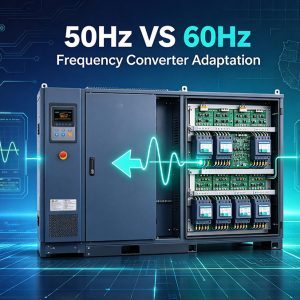
Exporting electrical equipment to the United States is not just a matter of plugs, labels, and shipping documents. If a machine was designed around 50Hz power, it may need careful adaptation before it can run reliably on the US 60Hz supply. This guide explains the practical issues behind 50Hz VS 60Hz Frequency Converter Adaptation for US Export Market planning, including where frequency matters, when a converter is useful, and what exporters should review before shipment.
Why does 50Hz vs 60Hz matter for US exports?
50Hz vs 60Hz matters because frequency affects the speed, heating, torque, timing, and long-term reliability of many AC-powered components. The United States commonly uses 60Hz utility power, while many export-origin markets use 50Hz, so equipment designed for one environment may behave differently in the other. A frequency converter helps bridge that gap by providing the electrical conditions the equipment expects, but it must be selected and integrated with the full system in mind.
The difference can look small on paper, yet it is significant in real operation. A motor, pump, fan, compressor, transformer, or timing-dependent device may not respond the same way at 60Hz as it did during factory testing at 50Hz. Some products tolerate both frequencies because they were designed for global use; others need redesign, parameter adjustment, or a dedicated conversion solution.
The equipment types most affected by frequency changes
Not every exported product needs the same level of adaptation. Electronic devices with switch-mode power supplies may accept a wide input range, while mechanical systems driven by AC motors can be more sensitive. The best starting point is to identify which parts of the machine depend directly on line frequency.
Common areas to review include:
- AC induction motors:Motor speed is tied to supply frequency, so performance can change when moving from 50Hz to 60Hz.
- Pumps and fans:Higher motor speed can increase flow, pressure, noise, vibration, and mechanical load.
- Compressors:Frequency changes may affect cooling capacity, lubrication behavior, and operating limits.
- Transformers:Voltage and frequency relationships influence magnetic flux and heat.
- Timers and synchronous devices:Some timing mechanisms use frequency as a reference.
- Heating systems with motors or controls:The heater itself may be simple, but fans, relays, or controllers may not be.
This review should go beyond the nameplate. Exporters should also examine wiring diagrams, control panels, overload settings, drive parameters, and any third-party components installed inside the equipment.
Frequency converters create a controlled electrical bridge
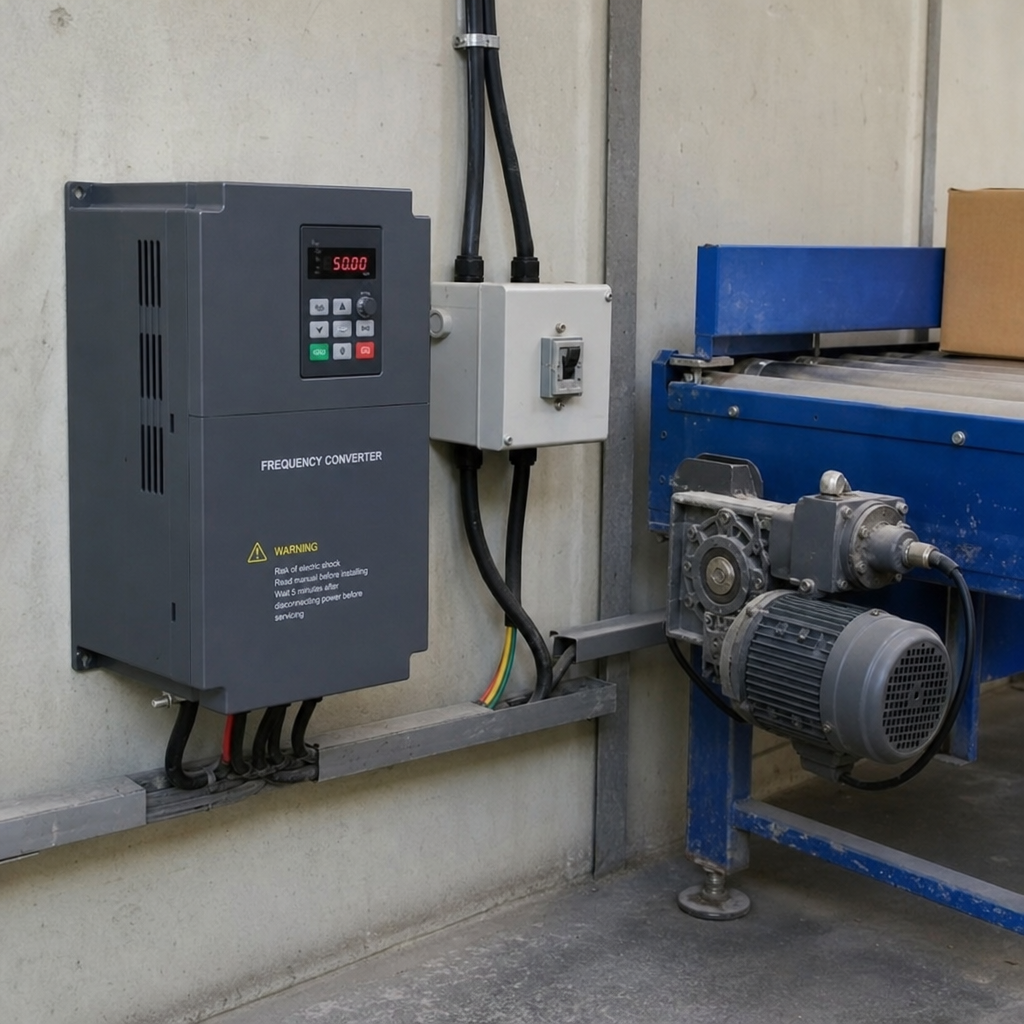
A frequency converter changes the incoming power frequency to the frequency required by the load. In a typical export scenario, it can allow equipment designed for 50Hz to operate from a 60Hz US supply by delivering suitable output frequency and voltage. For manufacturers, this can reduce the need to redesign an entire product line when serving multiple markets.
However, a converter is not a universal fix for every mismatch. The converter must be sized for the load type, starting current, duty cycle, phase requirements, enclosure environment, and control method. A motor that starts under heavy load, for example, may need more attention than a lightly loaded fan. Likewise, sensitive control electronics may require clean, stable power and proper grounding.
The converter should also be considered part of the machine’s architecture, not an afterthought bolted on before shipment. Placement, ventilation, cable routing, electromagnetic compatibility, safety labeling, and operator access all affect the final installation.
When is a frequency converter the right solution?
A frequency converter is often the right solution when the exported equipment must keep its original 50Hz operating behavior in a 60Hz market. This is especially relevant when changing the motor speed would alter product quality, process timing, flow rate, or mechanical stress. It is also useful when redesigning the equipment would be expensive, slow, or risky compared with adapting the power supply.
There are cases where a converter may not be necessary. If all components are rated for both 50Hz and 60Hz, and performance at 60Hz is acceptable, the equipment may only need documentation, settings changes, or component verification. In other cases, replacing a motor, adjusting pulleys, changing control parameters, or using a variable frequency drive may be a more targeted choice.
A practical decision process looks like this:
- Confirm the US electrical supply requirement.Identify expected voltage, phase, frequency, grounding method, and available capacity.
- Check every major component.Do not rely only on the main machine label; inspect motors, transformers, power supplies, contactors, and controls.
- Define acceptable performance.Determine whether speed, torque, temperature, noise, or output quality can change without causing problems.
- Compare adaptation options.Consider direct 60Hz operation, component replacement, a frequency converter, or a redesigned electrical package.
- Test before export.Simulate the US operating condition where possible, including startup, full load, stop cycles, and fault recovery.
This approach keeps the decision practical. The goal is not simply to “make it power on,” but to make sure the product performs safely and consistently after installation.
Key technical checks before shipping to the US
Frequency adaptation should be handled early in the export process because late changes can affect layout, certification planning, spare parts, and customer support. A structured checklist helps teams avoid hidden problems.
Before shipping, review:
- Voltage and frequency compatibility:Confirm whether the equipment needs 50Hz output, 60Hz operation, or adjustable frequency.
- Power rating and load profile:Size the converter for real operating conditions, including startup and peak demand.
- Phase configuration:Verify single-phase or three-phase requirements on both input and output sides.
- Motor behavior:Check speed, torque, current draw, insulation class, and thermal protection.
- Control integration:Confirm that PLCs, sensors, relays, and safety circuits operate correctly with the adapted power system.
- Cooling and enclosure needs:Converters generate heat and may need space, airflow, or environmental protection.
- Labeling and manuals:Update documentation so installers understand input requirements, output frequency, and operating limits.
- Service planning:Make sure replacement parts, settings, and troubleshooting steps are clear for US-based users.
These checks also support a better customer experience. US buyers usually care less about the technical reason behind the adaptation and more about whether the machine starts smoothly, runs as expected, and can be maintained without confusion.
Cost, reliability, and customer expectations
For exporters, frequency conversion is both a technical and commercial decision. A low-cost solution that causes nuisance trips, overheating, or unclear installation steps can create expensive after-sales problems. A well-planned adaptation, on the other hand, can make the product feel purpose-built for the US market even if the original platform was designed elsewhere.
Reliability depends heavily on correct sizing and honest assessment of the load. Underestimating startup current, ambient temperature, or duty cycle can shorten equipment life. Overlooking documentation can also create problems, because installers may connect the machine as if it were a standard 60Hz product when it actually needs converter-managed output.
Customer communication should be simple and direct. Explain what power supply is required, whether a converter is included, what the converter does, and whether the user can adjust settings. If the system must only run at 50Hz, say so clearly. If it can run at 60Hz with different output performance, describe the practical effect instead of hiding it in technical tables.
A smarter path into the US market
The most successful export adaptations start before the first shipment. Manufacturers should treat frequency as part of product localization, along with safety expectations, installation practices, documentation, and support. That mindset reduces surprises and helps sales teams answer technical questions with confidence.
For 50Hz VS 60Hz Frequency Converter Adaptation for US Export Market projects, the safest path is to evaluate the full electrical and mechanical system, choose the adaptation method that protects performance, and test under realistic conditions. A frequency converter can be an effective bridge between markets, but only when it is selected, installed, and explained as part of the complete export solution.