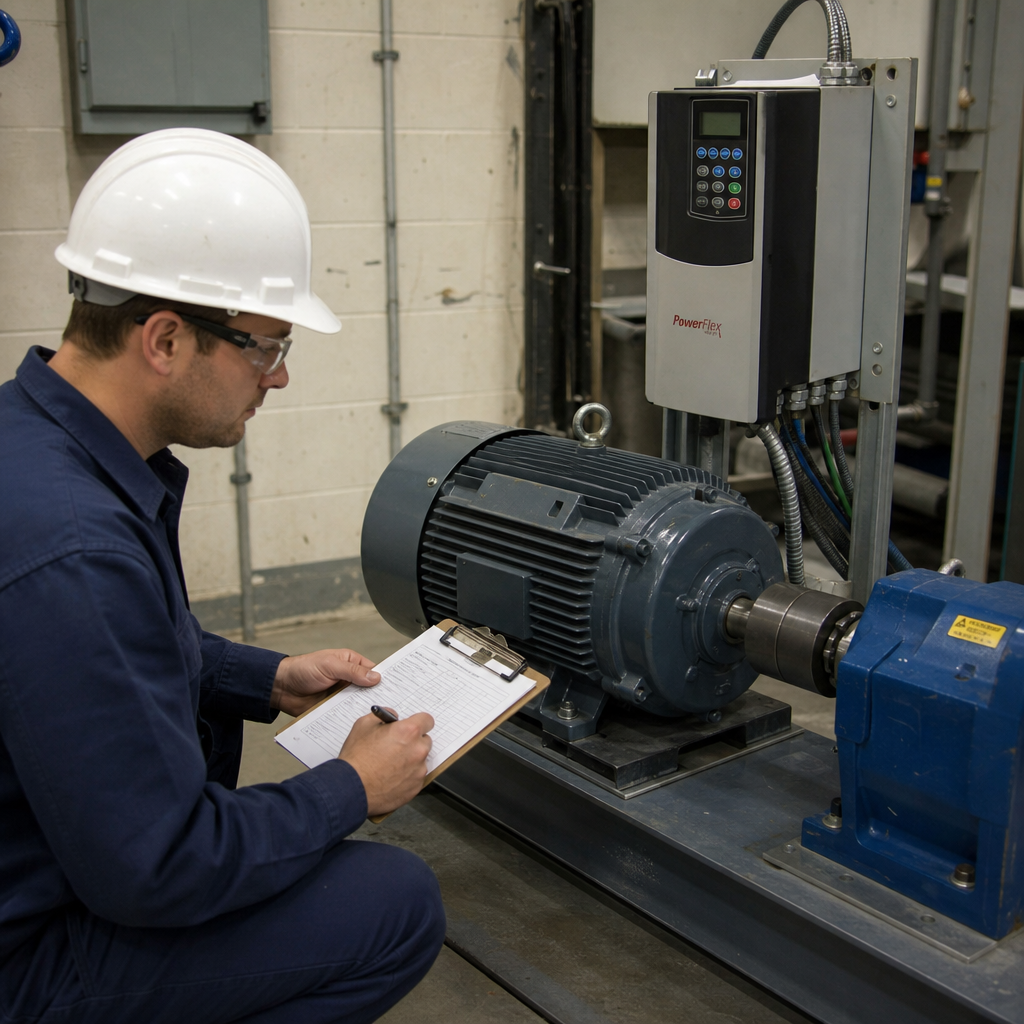
Choosing an industrial drive starts with matching the drive to the machine’s load, motion profile, environment, and control needs. The right choice improves uptime, energy use, speed control, and component life, while the wrong choice can create heat, slippage, vibration, premature wear, or process instability. This drive selection guide walks through the practical factors behind industrial automation drives, mechanical drive systems, and industrial motor selection.
What does an industrial drive need to do?
An industrial drive must transfer power from a motor to equipment in a way that supports the machine’s required speed, torque, duty cycle, and precision. In some systems, that means an electronic variable frequency drive controlling motor speed. In others, it may mean a belt, chain, gear, or direct drive arrangement that physically transmits power to a shaft, conveyor, pump, fan, mixer, or production machine.
Start with the job the equipment performs. A conveyor that runs steadily all day has different needs than a crusher that sees shock loads, or a packaging machine that starts and stops frequently. Defining the application first prevents you from choosing based only on horsepower or purchase cost.
Core factors in drive selection
A reliable industrial drive choice depends on both the motor and the driven equipment. Before selecting a drive, document the operating conditions as clearly as possible.
Key factors include:
- Load type:Constant torque, variable torque, high inertia, shock load, or intermittent load.
- Speed requirements:Fixed speed, adjustable speed, multiple operating speeds, or precise positioning.
- Torque demand:Starting torque, running torque, peak torque, and overload conditions.
- Duty cycle:Continuous operation, frequent starts, reversing, braking, or cycling.
- Environment:Heat, dust, moisture, washdown exposure, chemicals, or outdoor conditions.
- Space constraints:Shaft layout, guarding, mounting room, and maintenance access.
- Efficiency goals:Energy use, heat generation, and system losses over time.
- Maintenance expectations:Belt tensioning, lubrication, alignment checks, or electronic diagnostics.
These details also guide industrial motor selection. A motor and drive should be treated as a system, not two separate purchases.

Match the drive type to the application
Industrial automation drives, such as variable frequency drives, are often used when speed control, soft starting, energy savings, or process adjustment matter. They are common in fans, pumps, conveyors, compressors, and automated production lines where controlled acceleration and deceleration reduce mechanical stress.
Mechanical drives remain important when power must be transferred between shafts. Gear drives suit high-torque, compact applications. Chain drives handle rugged environments and positive engagement. Belt drives can offer quieter operation, flexibility in shaft spacing, and overload cushioning when properly selected.
How does belt drive selection work in industrial applications?
The belt drive selection method for industrial application begins by identifying horsepower, speed ratio, pulley diameters, center distance, service factor, and operating environment. The belt must be sized to carry the required load without excessive stretch, slip, heat, or bearing stress.
A practical belt drive review should include:
- Confirm motor speed and driven shaft speed.
- Calculate the required speed ratio.
- Account for shock loads, starts, and daily operating hours.
- Choose a belt type suited to the load and environment.
- Verify pulley size, belt wrap, and center distance.
- Check guarding, alignment, and tensioning access.
Belts are not “set and forget” components. Proper tension, pulley alignment, and periodic inspection are essential for long belt life and stable performance.
Selection mistakes that shorten equipment life
Many drive problems come from undersizing, ignoring starting torque, or overlooking the environment. A drive that looks adequate on paper may fail early if it faces dust, heat, washdown, vibration, or frequent cycling. Another common mistake is focusing on motor horsepower while ignoring torque at the driven shaft.
Avoid these issues by reviewing the full operating profile, not just normal running conditions. Consider startup, jam conditions, overloads, emergency stops, and maintenance access. If equipment is critical to production, build in an appropriate service margin rather than selecting the smallest workable option.
A practical final checklist
Before approving a drive, confirm that it:
- Matches the machine’s torque and speed requirements.
- Supports the required control method and duty cycle.
- Fits the physical layout and shaft arrangement.
- Withstands the operating environment.
- Works with the selected motor and power supply.
- Allows safe inspection, adjustment, and replacement.
- Balances upfront cost with reliability, efficiency, and maintenance.
The best drive is not always the most powerful or complex option. It is the one that fits the equipment, protects the process, and performs consistently under real operating conditions.