
A kisfeszültségű motorok és a nagyfeszültségű motorok közötti választás nem csupán elektromos jellemzőkkel kapcsolatos döntés. Ez befolyásolja a telepítés költségeit, a kábelek méretezését, a hatékonyságot, az indítási viselkedést, a karbantartási tervezést és a hosszú távú megbízhatóságot. Ez az útmutató bemutatja, hogyan tudnak az ipari csapatok összehasonlítani mindkét lehetőséget, valamint praktikus motortipus-választási útmutatót készíteni pumpákhoz, kompresszorokhoz, szállítószalagokhoz, ventilátorokhoz, darálókhoz és egyéb gyártósori berendezésekhez.
Melyik motorfeszültség a megfelelő egy ipari alkalmazásnál?
A megfelelő feszültség függ a motor teljesítményétől, a tápellátástól való távolságtól, a munkaciklustól, az indítási követelményektől, a létesítmény infrastruktúrájától és az életciklus-költségektől. A kisfeszültségű motorok gyakran egyszerűbb választás kisebb és közepes teljesítményű berendezések esetén, mivel széles körben elérhetők és könnyebben karbantarthatók. Nagyfeszültségű motorok általában akkor érvényesek, amikor a teljesítményigény magas, a kábelhosszak hosszúak, vagy az áram csökkentése létfontosságú a biztonságos és hatékony működés érdekében.
Kisfeszültségű motorok a gyakorlati gyári környezetben
A kisfeszültségű motorokat gyakran használják olyan helyeken, ahol a berendezések a termelési sorokon, csomagolóterületeken, HVAC-rendszereknél, vízkezelő blokkoknál és általános folyamatgépeknél vannak elosztva. Ezek általában könnyen integrálhatók a standard motorvezérlő központokkal, változtatható frekvenciájú vezérlőkkel, kapcsolóberendezésekkel és a gyári villamosmérnökök számára már ismerős karbantartási gyakorlatokkal.
Fő előnyük a könnyű hozzáférhetőség. A pótalkatrészek, tartalék alkatrészek, szerviztechnikusok és vezérlőrendszerek általában könnyebben beszerezhetők, ami csökkentheti az állásidőt, ha egy motor meghibásodik. Jól alkalmazhatók moduláris gépekhez is, ahol a motor egy csomagolt rendszer része.
A korlátozás az áram. A motor méretének növekedésével a kisfeszültségű kivitel nagyobb kábeleket, nagyobb kapcsolókat, erősebb hőelvezetést és masszívabb indítóberendezéseket igényelhet. Ezáltal a telepített rendszer terebélyesebbé és drágábbá válhat, mint amennyire a motor névrajza egyedül utalna.
Nagyfeszültségű motorok nehéz ipari terhelésekhez
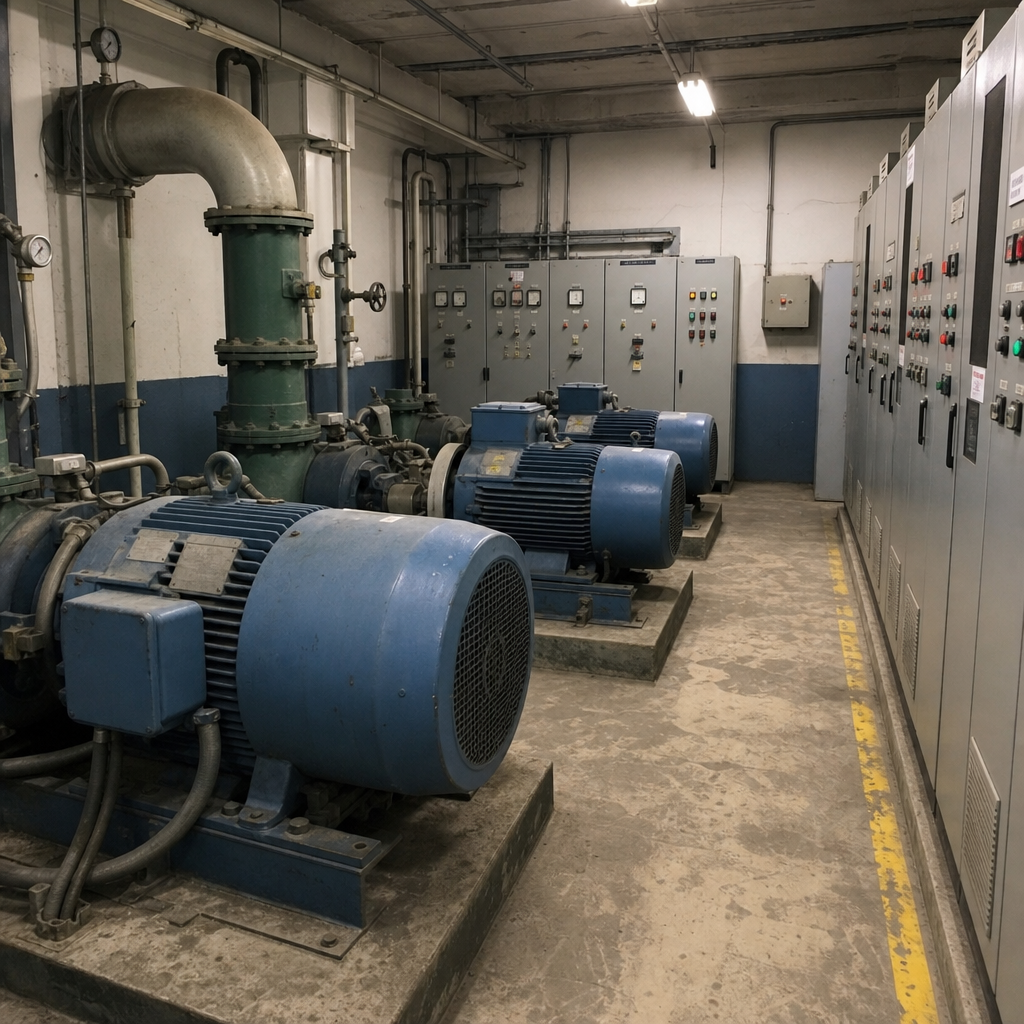
Nagyfeszültségű motorokat akkor használnak, amikor az alkalmazások jelentős teljesítményt igényelnek, különösen bányászatban, cementgyártásban, petrokémiai iparban, papír- és cellulózgyártásban, energiatermelésben, a hajózási szektorban és nagy vízgazdálkodási infrastruktúrákban. Magasabb feszültségen üzemelve ugyanakkora teljesítmény mellett alacsonyabb áramot vonnak, ami csökkentheti a vezetékek méretét, a feszültségesszükségletet és az elektromos veszteségeket hosszú távolságokon.
Ez teszi a nagyfeszültségű kivitelet vonzóvá nagy pumpákhoz, indukciós ventilátorokhoz, malomgépekhez, kompresszorokhoz és más berendezésekhez, amelyek folyamatosan vagy nagy igények mellett működnek. Azonban ezek speciális védelmi rendszert, kapcsolóberendezéseket, szigetelési rendszereket, vizsgálati eljárásokat és képzett karbantartó személyzetet igényelnek.
Egy nagyfeszültségű telepítést ritkán a kényelem miatt választanak. Inkább azért, mert az alkalmazás mérete, az elektromos elrendezés vagy a működés gazdaságossága indokolja a további mérnöki precizitást.
Mit kell tartalmaznia egy motor teljesítményelemzésének?
A motor teljesítményelemzésenek a névleges lóerőn és feszültségen túl is össze kell hasonlítania. Ki kell értékelnie, hogyan viselkedik a motor indításkor, normál üzemmódban, terhelés-változások során, hibaelhárítási esetekben és karbantartási események során. A legjobb választás az, amely a legalacsonyabb gyakorlati összköltség mellett megbízhatóan támogatja a folyamatot.
A kulcsfontosságú tényezők közé tartoznak:
- Terhelési profil:A konstans terhelésű berendezések igazolhatják a nagyobb hatékonyságú kialakítást, míg az időszakos terhelések inkább az indítási teljesítményt és a vezérlés rugalmasságát helyezhetik előtérbe.
- Indítási módszer:A vonalas indítás, a lágyindítók és a VFD-k befolyásolják az indulási áramot, a mechanikai terhelést és a folyamat stabilitását.
- Kábelhossz:A hosszú távú táplálóvezetékek miatt a magasfeszültségű motorok vonzóbbá válhatnak, mivel az alacsonyabb áramerősség segít kezelni a feszültségessökkenést.
- Motor hatásfok-minősítések:Hasonlítsa össze a hatékonyságot a várható terhelésnél, nemcsak teljes terhelésnél, mert sok motor nem üzemel folyamatosan a névleges teljesítményén.
- Karbantartási képesség:Gondolja át, hogy az adott létesítmény rendelkezik-e képzett személyzettel, tesztberendezéssel és biztonsági eljárásokkal a kiválasztott feszültségi osztályhoz.
- Rendszer költsége:Tartalmazza a kapcsolóberendezéseket, meghajtókat, kábelezést, telepítési munkaerőt, pótalkatrészeket, védelmi eszközöket és az állásidővel járó kockázatokat.
:A hatékonyság és az életciklus költsége fontosabb, mint a vételár
A motorok hatékonysági besorolása fontos, mert az ipari motorok gyakran sok órát dolgoznak éveken keresztül. Egy kis hatékonysági különbség jelentőséggel bírhat, ha a motor nagy méretű, erősen terhelt vagy folyamatosan üzemel. Ugyanakkor a hatékonyságot az egész rendszer részeként kell tekinteni, beleértve a meghajtott berendezéseket, vezérlést, egyengedést, szellőzést és a karbantartás minőségét.
Az alacsony feszültségű motorok kevesebb kiinduló bonyolultságot nyújthatnak, míg a magasfeszültségű motorok csökkenthetik a veszteségeket és az elektromos infrastruktúra igényeit nagyobb alkalmazásokban. A jobb pénzügyi döntés az üzemidőtől, az energia költségeitől, a megbízhatósági igényektől és az állásidő költségétől függ.
Egy egyértelmű választási útvonal
Használja ezt a gyors döntési keretrendszert a motor specifikálása előtt:
- Válasszon alacsony feszültségű motorokatamikor a berendezés mérete közepes, a karbantartás egyszerűsége fontos, a vezérlés szabványos, és a kábelhosszak kezelhetők.
- Válasszon magas feszültségű motorokatamikor nagy az energiaigény, értékes a folyamatos áramcsökkentés, hosszúak a táplálóvezetékek futása, vagy a folyamat indokolja a speciális villamos infrastruktúrát.
- Vizsgálja felül a döntést, ha az alkalmazás gyakori indításokat, zord környezeti feltételeket, változtatható fordulatszámú működést vagy kritikus termelési üzemmegszakításokat tartalmaz.
Egy megbízható motorválasztási útmutató soha nem kezelheti a feszültséget önmagában. A legjobb döntés akkor születik, ha a motort, az energiaellátó rendszert, a vezérlést, a környezetet és a folyamat munkafeltételét egy egységes, megbízható alkalmazási stratégiába illesztjük.