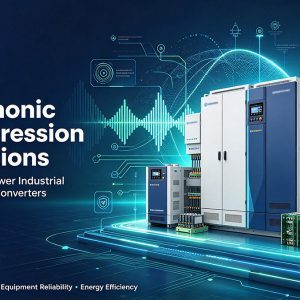
High-power industrial frequency converters make modern production more flexible, but they can also introduce electrical distortion into a facility’s power network. Effective harmonic suppression protects equipment, improves power quality, supports energy efficiency, and helps plants run with fewer interruptions. The right approach usually starts with harmonic analysis, then combines suitable filter systems, good engineering practice, and ongoing monitoring.
Why do high-power frequency converters create harmonics?
High-power frequency converters create harmonics because they draw current in pulses rather than as a smooth sine wave. This non-linear current demand can distort voltage and current waveforms throughout the electrical system, especially where large drives, rectifiers, motors, transformers, and shared distribution equipment operate together. In practical terms, harmonics can lead to overheating, nuisance trips, transformer stress, cable losses, reduced power factor, and electrical noise that affects sensitive control equipment.
A frequency converter is not “bad” because it creates harmonics. It is simply part of a power electronics environment that must be managed properly. In heavy industry, water treatment, mining, petrochemical processing, HVAC plants, manufacturing lines, and marine applications, converters are often essential for speed control and process optimization. Harmonic Suppression Solutions for High-power Industrial Frequency Converters help facilities gain those control benefits without allowing distortion to undermine reliability.
Harmonic suppression starts with knowing the system
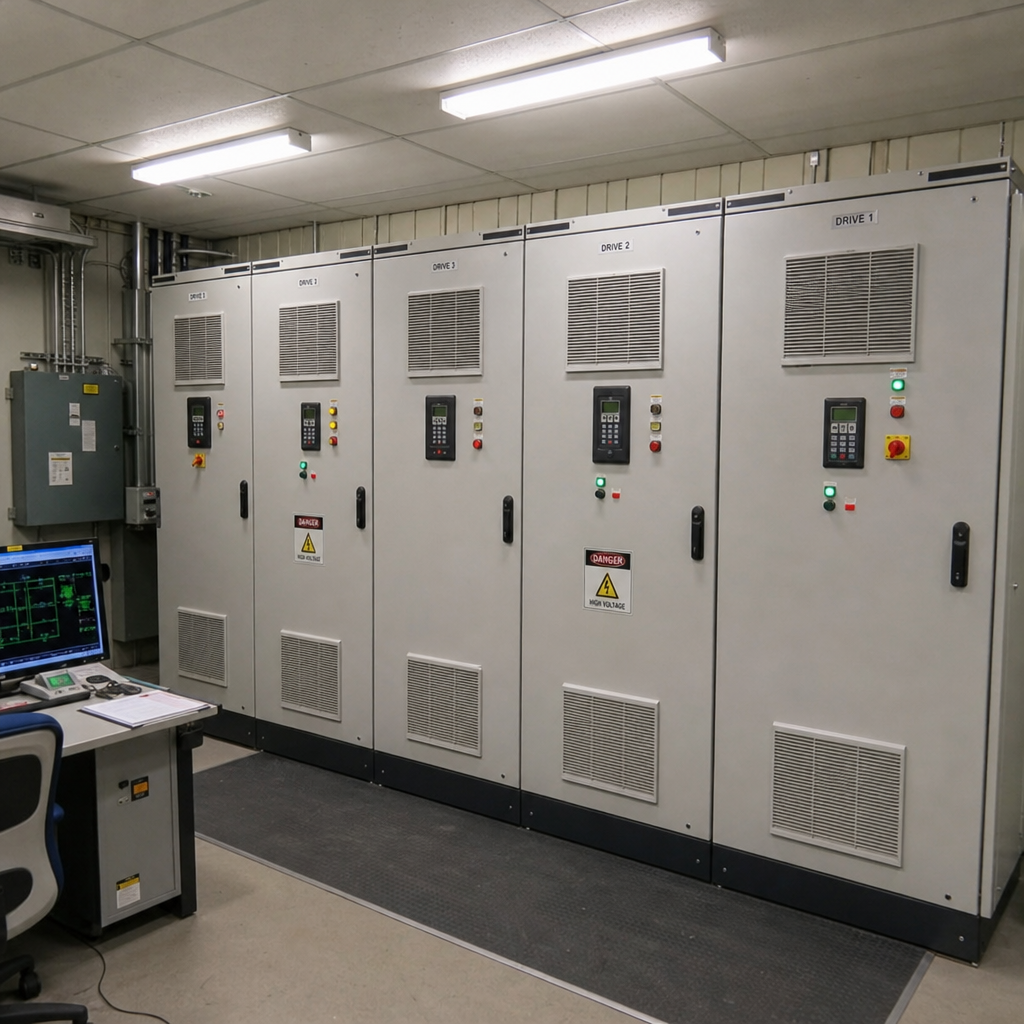
Before selecting equipment, engineers need to understand where distortion is coming from, how severe it is, and which parts of the network are most affected. This is where harmonic analysis becomes the foundation of a successful solution. It provides a clearer picture of current distortion, voltage distortion, load profiles, resonance risks, transformer loading, and how different converters interact under real operating conditions.
A good study looks beyond a single drive. It considers the entire electrical environment, including supply impedance, generator or utility connection characteristics, capacitor banks, grounding arrangements, motor sizes, cable lengths, and future expansion plans. Without that context, a filter may reduce one problem while unintentionally creating another, such as resonance at a specific harmonic order.
Useful harmonic analysis typically reviews:
- Load behavior:How converters operate at different speeds, torque levels, and duty cycles.
- Distortion levels:Which harmonic orders are dominant and whether distortion changes during production.
- Voltage sensitivity:Whether controls, sensors, relays, or communication equipment are being affected.
- Thermal impact:Whether transformers, motors, cables, or switchgear show signs of excess heating.
- Power factor conditions:Whether poor displacement or distortion power factor is increasing demand on the supply.
- Expansion plans:Whether new drives or process changes could increase harmonic levels later.
This stage helps avoid oversized, undersized, or poorly matched filter systems. It also gives maintenance and operations teams a baseline they can use to measure improvement after installation.
Practical filter systems for industrial environments
Filter systems are commonly used to limit harmonic distortion and improve power quality in facilities with large frequency converters. The best choice depends on the converter design, network strength, load variability, and performance goals. In many industrial settings, the solution may include passive filters, active filters, line reactors, multi-pulse arrangements, or a combination of technologies.
Passive filters are often selected for stable loads where dominant harmonic orders are predictable. They are designed to provide a low-impedance path for specific harmonics, reducing the amount that flows back into the power system. They can be robust and efficient, but they must be carefully engineered around resonance conditions and network changes.
Active harmonic filters are more flexible. They monitor harmonic currents and inject compensating currents to reduce distortion dynamically. This can be valuable where load conditions change throughout the day or where multiple converters operate in different patterns. Active systems can also support power factor correction in some configurations, making them attractive for plants that need adaptable performance.
Line reactors and DC chokes are simpler components, but they can still play an important role. By adding impedance, they smooth current draw, reduce peak current stress, and help protect converters from certain supply disturbances. They may not deliver the same level of suppression as a dedicated filter, but they are often part of a layered design.
How do harmonics affect energy efficiency and power factor?
Harmonics affect energy efficiency and power factor by increasing losses and causing the electrical system to work harder than necessary. Distorted current can raise heating in transformers, cables, motors, and switchgear, while a poor power factor can increase apparent power demand and reduce available capacity. Correcting these issues can help the same infrastructure support production more reliably.
It is important to separate true efficiency gains from general performance improvements. Harmonic suppression does not magically reduce every energy bill, and results depend on the original level of distortion, equipment loading, and utility tariff structure. However, cleaner waveforms can reduce avoidable losses, improve usable capacity, and support stable operation, which often matters just as much as direct energy savings.
Improved power quality can also make energy efficiency projects more effective. For example, a plant may install frequency converters to reduce motor speed and save energy, but if the resulting harmonics create heat and trips elsewhere, the project becomes harder to justify. Proper suppression helps preserve the intended benefit of variable-speed control.
Noise reduction and equipment reliability go together
Electrical harmonics are often discussed in terms of waveforms, but their effects can appear as very practical problems on the plant floor. Operators may notice audible transformer hum, motor vibration, communication interference, flickering, or unexplained control faults. While not every noise issue is harmonic-related, noise reduction is often one of the visible benefits of improving waveform quality.
Mechanical and electrical symptoms can overlap. Harmonic currents can create additional torque pulsations in motors, heating in magnetic components, and interference in low-voltage signal circuits. Over time, these stresses may shorten equipment life or increase maintenance work. A well-designed suppression strategy helps reduce these hidden burdens, giving maintenance teams fewer recurring symptoms to chase.
For critical processes, reliability is usually the strongest business case. Avoiding a converter trip during production, preventing transformer overheating, or reducing unexplained automation faults can be more valuable than any single efficiency metric. Cleaner power supports steadier production.
Selection factors that shape the best solution
Choosing harmonic suppression equipment is not just a catalog decision. A high-power converter connected to a weak supply may need a different approach than the same converter connected to a strong utility network. Likewise, a continuously running pump application may need a different design from a process line with rapidly changing loads.
Key selection factors include:
- Converter size and topology— The rated power, rectifier type, switching method, and drive configuration all influence harmonic behavior.
- Supply characteristics— Short-circuit capacity, transformer impedance, generator operation, and utility requirements affect filter design.
- Lastprofil— Stable loads may suit tuned passive filters, while variable loads may favor active compensation.
- Existing correction equipment— Capacitor banks and older power factor correction systems must be checked for resonance risk.
- Space and environment— Heat, dust, vibration, enclosure ratings, and ventilation affect installation choices.
- Wartungsfähigkeit— Facilities should choose systems their teams can inspect, test, and maintain safely.
- Future expansion— A solution should account for planned converters, motor upgrades, or production growth.
These factors help align technical performance with real plant conditions. The goal is not simply to “add a filter,” but to design a system that keeps working as operations change.
A practical implementation roadmap
A structured plan reduces risk and makes results easier to verify. Start with measurements, not assumptions. Then compare options based on performance, lifecycle maintenance, integration complexity, and how the solution supports power quality goals.
A practical roadmap includes:
- Measure current conditionsunder normal and peak operating scenarios.
- Perform harmonic analysisto identify dominant distortion sources and system interactions.
- Define performance targetsfor distortion, power factor, reliability, and noise reduction.
- Select suitable filter systemsbased on load behavior and network characteristics.
- Review protection coordinationso filters, breakers, relays, and converters operate safely together.
- Plan installation carefullyaround ventilation, cable routing, access, and downtime windows.
- Verify results after commissioningwith follow-up measurements and trend monitoring.
This process gives stakeholders confidence that the investment is solving the right problem. It also creates documentation that can support maintenance planning and future upgrades.
Cleaner power supports stronger industrial performance
Harmonic suppression is not just an electrical engineering detail. For facilities using high-power industrial frequency converters, it is part of protecting uptime, equipment life, process stability, and energy efficiency. When filter systems are selected through proper harmonic analysis and matched to real operating conditions, they can improve power quality, support better power factor, and contribute to meaningful noise reduction.
The most effective solutions are practical, measured, and designed for the whole electrical system. By treating harmonics as a manageable part of industrial power design, plants can keep the benefits of variable-speed control while reducing the risks that distorted power can create.