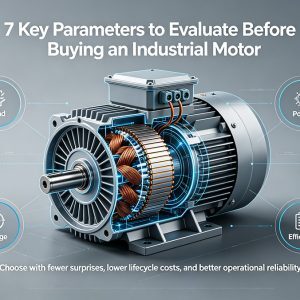
Buying an industrial motor is not simply a matter of matching horsepower and placing an order. The right motor has to fit the load, environment, duty cycle, control system, efficiency goals, and long-term maintenance plan. This guide explains the 7 Key Parameters to Evaluate Before Buying an Industrial Motor so you can choose industrial motors with fewer surprises, lower lifecycle costs, and better operational reliability.
What should you check before choosing an industrial motor?
Before choosing an industrial motor, check whether the motor can safely and efficiently perform the actual work required in your application. That means looking beyond the nameplate rating and evaluating how the motor will start, run, stop, handle heat, tolerate its environment, and integrate with the rest of your equipment. A motor that looks suitable on paper can still fail early if it is undersized, overworked, poorly protected, or incompatible with the load profile.
A practical evaluation should include these seven areas:
- Load requirements and torque profile
- Power rating and service factor
- Speed and control needs
- Voltage, phase, and electrical compatibility
- Operating environment and enclosure type
- Efficiency and lifecycle cost
- Reliability, maintenance, and supplier support
Load requirements define the starting point
The load is the first parameter because the motor exists to move, compress, pump, lift, mix, cut, or drive something. Different loads behave differently. A conveyor may need steady torque, a crusher may experience shock loading, and a fan or pump may follow a variable torque curve where power demand rises quickly as speed increases.
Start by identifying the mechanical demand at startup and during normal operation. Some equipment needs high starting torque to overcome inertia or breakaway friction. Other systems start lightly and reach full load gradually. If the motor cannot deliver enough torque at the right time, it may stall, draw excessive current, overheat, trip protection devices, or shorten the life of connected components.
Useful questions include:
- What equipment will the motor drive?
- Is the load constant, variable, cyclic, or intermittent?
- Does the application involve frequent starts and stops?
- Are there shock loads, jams, reversals, or overload conditions?
- What torque is required at startup and at operating speed?
Do not rely only on a previous motor’s size if the process has changed. New production demands, added attachments, different materials, or altered operating hours can all change the real load requirement.
Power rating and service factor protect performance margins
Power rating, often expressed in horsepower or kilowatts, tells you the motor’s output capacity under specified conditions. Selecting too little power can cause overheating and nuisance shutdowns. Selecting far too much power can waste energy, reduce efficiency at light load, and increase purchase cost.
Service factor adds another layer of judgment. It indicates how much overload a motor may tolerate under defined conditions, but it should not be treated as permission to run overloaded continuously. A service factor is best viewed as a safety margin for occasional fluctuations, not as a substitute for correct sizing.
When evaluating power rating, consider:
- Actual load demand rather than rough estimates
- Ambient temperature and cooling conditions
- Altitude or unusual site conditions, if relevant
- Expected overloads during production
- Whether future capacity increases are likely
A well-sized motor runs close enough to its efficient operating range while still having enough margin for practical operating variation. The goal is not simply “bigger is safer.” The goal is appropriate capacity with reliable thermal and mechanical performance.
How do speed and control requirements affect motor selection?
Speed and control requirements determine whether the motor can operate the process at the right pace, with the right responsiveness, and without unnecessary energy use. Some applications need one fixed speed, while others need smooth acceleration, variable output, precise positioning, or frequent speed changes. The more dynamic the process, the more important it becomes to evaluate the motor and control method together.
For fixed-speed applications, the motor’s rated RPM and the driven equipment’s required speed must align, often through belts, pulleys, gearboxes, or direct coupling. For variable-speed applications, you may need a motor suitable for use with a variable frequency drive. Not every motor is ideal for drive-controlled operation, especially where low-speed cooling, insulation stress, or bearing currents are concerns.
Consider the process result you need. Pumps and fans often benefit from speed control because output can be matched to demand. Material handling systems may need controlled starts and stops to reduce mechanical stress. Machine tools, robotics, and indexing systems may require more precise speed or position control than a standard motor arrangement can provide.
Electrical compatibility prevents installation problems
A motor must match the available electrical supply and the facility’s control infrastructure. Voltage, phase, frequency, starting method, protection devices, and wiring requirements all affect whether the motor can be installed safely and operated correctly.
Industrial facilities commonly use three-phase power for larger motors, but assumptions can be expensive. Confirm the supply voltage and frequency at the installation point, not just at the main service. Voltage drops, long cable runs, and transformer limitations can all affect performance.
You should also review the starting method. Across-the-line starting is simple but can create high inrush current. Soft starters and variable frequency drives can reduce mechanical and electrical stress, but they must be compatible with the motor and application. Protection devices should be selected to guard against overload, short circuit, phase loss, ground faults, and other relevant risks.
Before buying, verify:
- Supply voltage, phase, and frequency
- Full-load current and starting current
- Control panel compatibility
- Cable length and installation constraints
- Required overload and short-circuit protection
- Any applicable facility standards or safety requirements
Environment and enclosure type determine durability
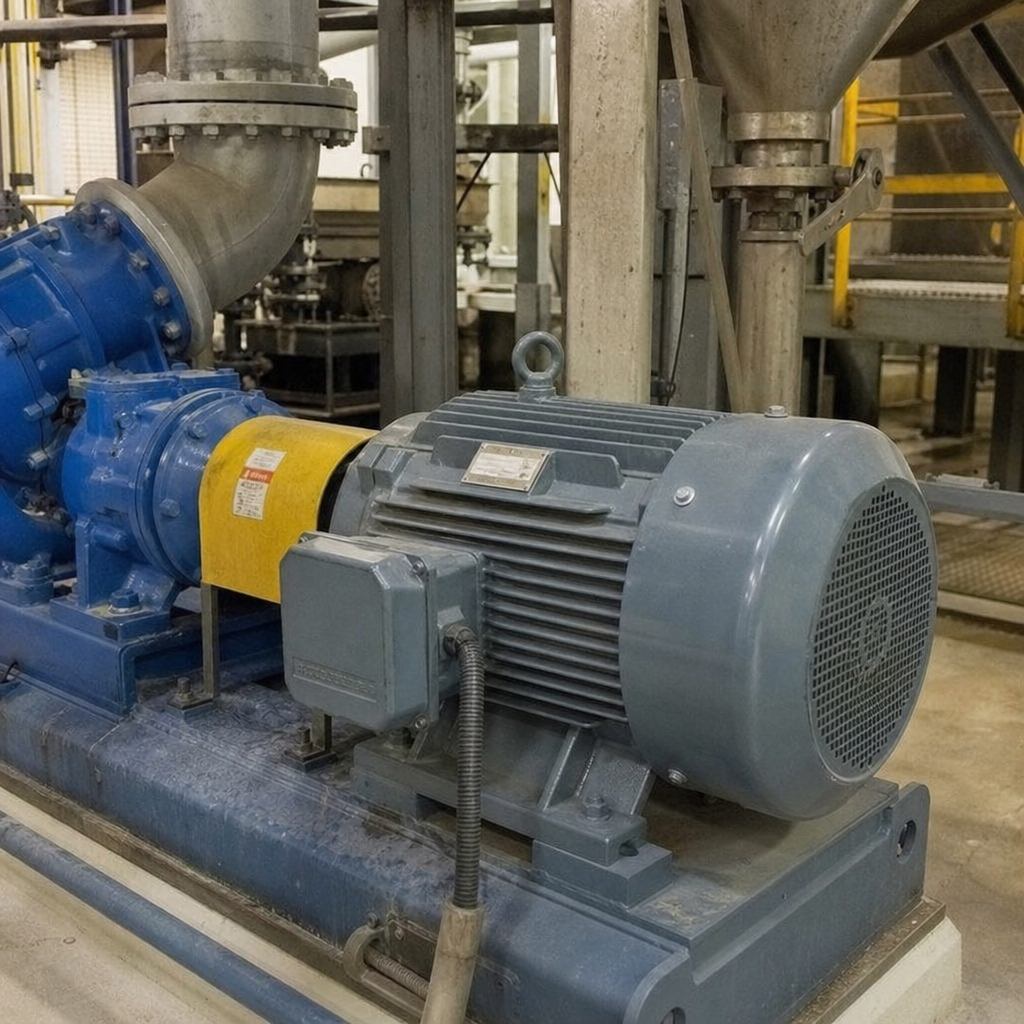
The surrounding environment can be as important as the load itself. Dust, moisture, washdown, chemicals, high heat, low temperatures, vibration, and outdoor exposure can all shorten motor life if the enclosure and materials are not suitable.
Motor enclosures help protect internal components while allowing necessary cooling. A clean, dry indoor area may allow a different enclosure than a wet, dusty, corrosive, or hazardous locati0n. If the motor will operate near powders, fibers, oils, sprays, or aggressive chemicals, the enclosure, seals, coatings, and bearings deserve careful attention.
Cooling is also part of environmental suitability. Motors generate heat during operation, and poor airflow can cause excessive temperature rise. A motor installed in a cramped space, near hot equipment, or under heavy dust buildup may run hotter than expected. That heat can damage insulation, reduce bearing life, and increase failure risk.
Match the motor to real site conditions, not ideal catalog conditions. If the application includes washdown, outdoor exposure, explosive atmospheres, or corrosive process materials, involve qualified engineering or safety personnel before purchasing.
Efficiency and lifecycle cost matter beyond the purchase price
The purchase price is only one part of the cost of an industrial motor. Energy consumption, downtime, maintenance, repairs, spare parts, and replacement labor can outweigh the initial cost over time. This is especially true for motors that run many hours per day or support critical production equipment.
Higher-efficiency motors may reduce operating cost, but the best choice depends on runtime, load level, energy rates, and application needs. A motor that runs continuously deserves closer efficiency analysis than one used occasionally. Likewise, a motor that is poorly sized may not deliver the expected efficiency benefit, even if its rated efficiency looks attractive.
A lifecycle view includes:
- Initial purchase and installation cost
- Energy use at expected load
- Control strategy, such as fixed speed or variable speed
- Expected maintenance requirements
- Downtime risk if the motor fails
- Availability of replacement parts
- Ease of repair or replacement
When comparing options, look for the motor that delivers the best long-term value in the actual operating context. The cheapest option can become expensive if it fails early, wastes energy, or requires frequent service.
Reliability and maintenance support reduce operational risk
Reliability is not only about the motor design. It also depends on installation quality, alignment, lubrication, operating conditions, and maintenance discipline. A strong motor can still fail prematurely if it is misaligned, overloaded, contaminated, or ignored until symptoms become severe.
Maintenance access should be considered before purchase. If technicians cannot easily inspect, lubricate, clean, or replace the motor, service becomes slower and more costly. For critical equipment, also consider whether spare motors or key components should be stocked on site.
Supplier support matters as well. Clear documentation, accurate technical data, responsive assistance, and parts availability can make troubleshooting faster. When production depends on the motor, the ability to get reliable support may be just as important as the specification sheet.
A simple pre-purchase maintenance checklist includes:
- Confirm access for inspection and removal
- Review bearing type and lubrication needs
- Check mounting style and alignment requirements
- Confirm documentation and wiring diagrams are available
- Identify spare parts or replacement lead times
- Plan condition monitoring if the application is critical
A practical selection process keeps decisions grounded
The best way to choose industrial motors is to move from application facts to technical requirements, then from technical requirements to supplier options. Skipping directly to a catalog model increases the chance of overlooking a condition that affects performance.
Use this practical sequence:
- Define the driven equipment and load behavior.
- Confirm required torque, power, and speed.
- Review duty cycle, starts, stops, and overloads.
- Verify electrical supply and control method.
- Match enclosure and construction to the environment.
- Compare efficiency and lifecycle cost, not only price.
- Confirm maintenance access, documentation, and support.
This process helps turn a broad buying decision into a clear engineering and operations choice. It also makes discussions with suppliers more productive because you can describe what the motor must do, where it will operate, and what constraints matter most.
Final thoughts before you buy
Industrial motor selection works best when it balances performance, protection, efficiency, and serviceability. The right motor should fit the load, match the electrical system, survive the environment, and support the way your facility actually operates.
Before purchasing, gather accurate application data and review the seven parameters carefully. If the application is complex, hazardous, high-value, or production-critical, get input from qualified technical personnel before committing. A little more evaluation upfront can prevent costly downtime, premature failure, and avoidable replacement later.